
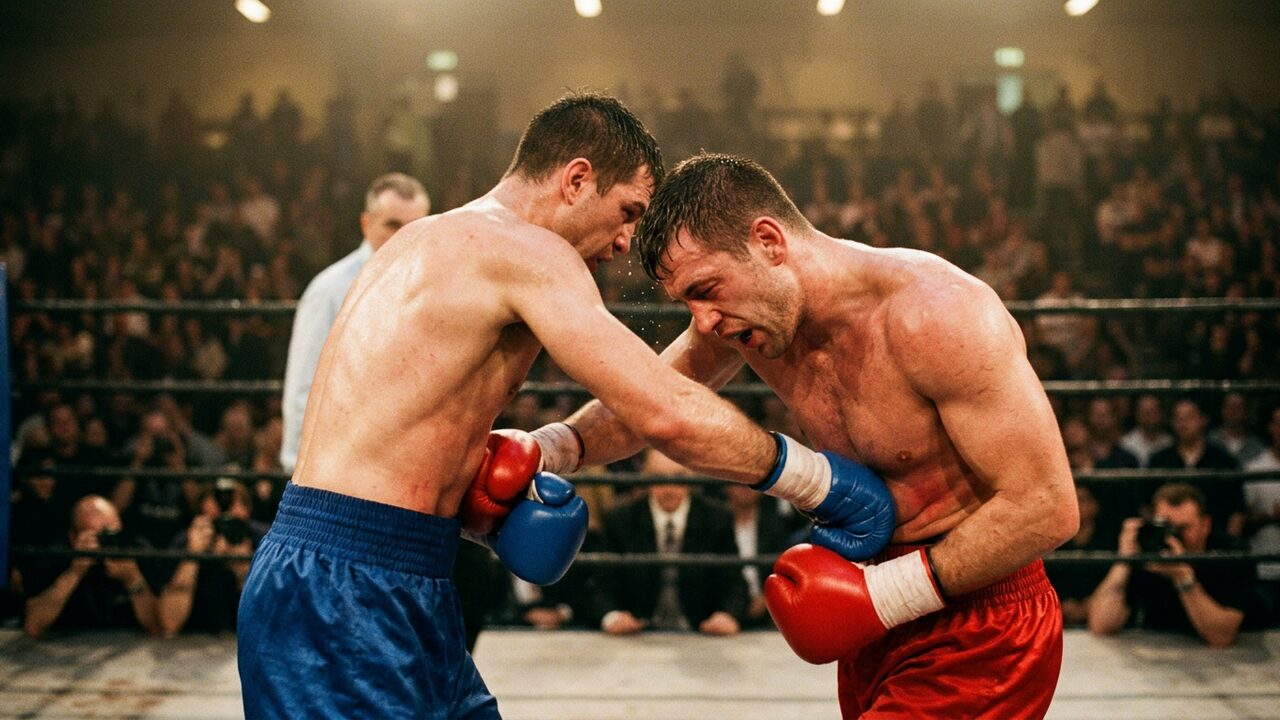
Damage that compounds
A single clean shot to the head can end a fight instantly, but a single shot to the body rarely does; its effect is cumulative rather than immediate. Muscle and organs absorb repeated blows in a way that slowly reduces a fighter's capacity to move and breathe efficiently, so the tenth body shot does more damage than the first even though each one looks similar to a spectator. This is why body work is often described as an investment rather than a weapon.
The quiet cost to legs and guard
As the body absorbs punishment, a fighter's legs tend to go first, because the muscles used to push off the canvas are among those affected by repeated body shots. A tired lower body means slower footwork, which means the angles and retreats discussed elsewhere become harder to execute. The guard often drops too, not from a conscious decision but from simple fatigue, and a lowered guard turns a previously well-defended head into a live target in the final rounds.
A bet on distance
Because the payoff is delayed, committing to the body is effectively a bet that the fight will go long enough for the investment to mature, which is why body punchers often look to be losing early rounds on the scorecards. Trainers who understand this will accept a slow start if the underlying work is sound, and commentators who only watch for immediate head shots frequently misjudge who is actually winning a fight built this way.