
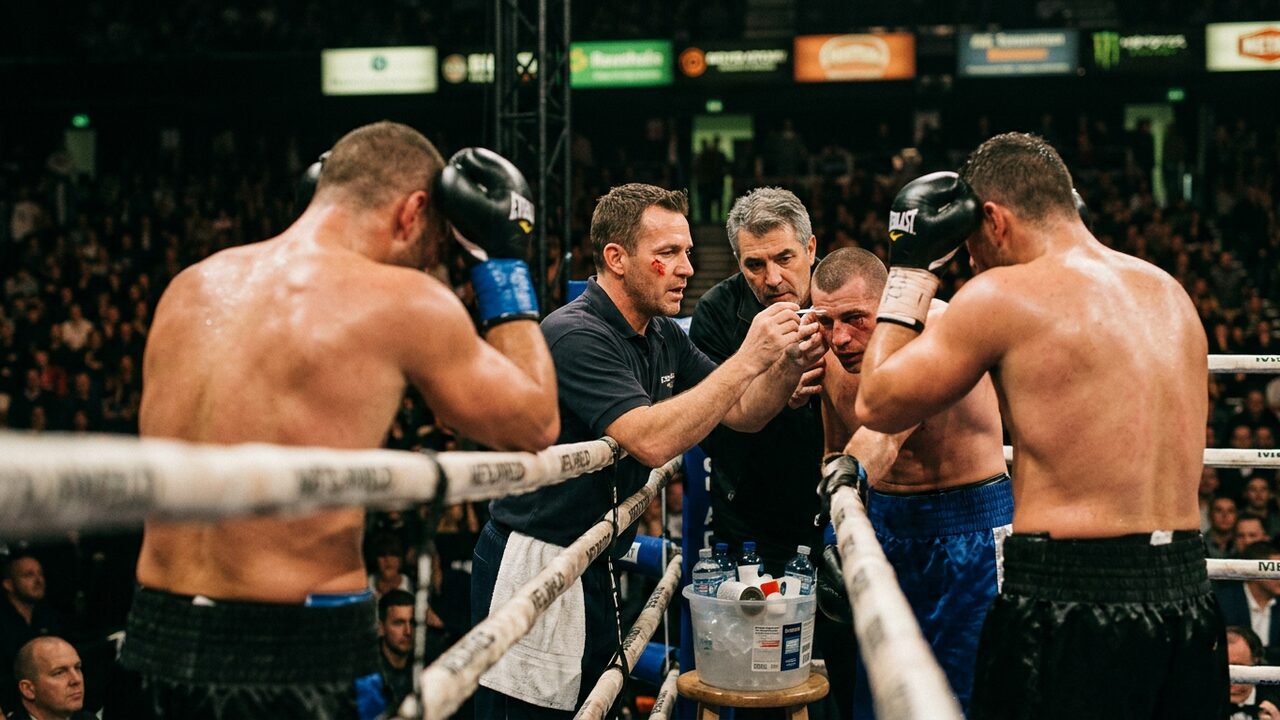
A minute to decide everything
Between rounds, a corner has roughly sixty seconds to clean cuts, deliver instructions and judge how much a fighter has left, all while the fighter is breathing hard and often reluctant to admit how much trouble they are in. Good cornering means reading physical signs quickly and honestly rather than relying on what the fighter says, since a fighter's own judgement in that state is not always reliable.
The cost of stopping either too early or too late
Throwing in the towel ends a fighter's opportunity immediately and can end a career narrative built around a single fight, so corners are understandably reluctant to do it while there is a plausible path back. But waiting too long risks serious and sometimes permanent harm, and the sport's history contains enough cautionary examples that experienced cornermen treat the decision as one they would rather make a round early than a round late.
Shared but unequal authority
The referee retains ultimate authority to stop a fight in the ring, and the ringside doctor can also intervene on medical grounds, so a corner's towel is only one of several ways a contest can end. This layered system exists precisely because no single party's incentives are perfectly aligned with fighter safety in the moment, and the overlapping checks are designed to catch what any one of them might miss.