
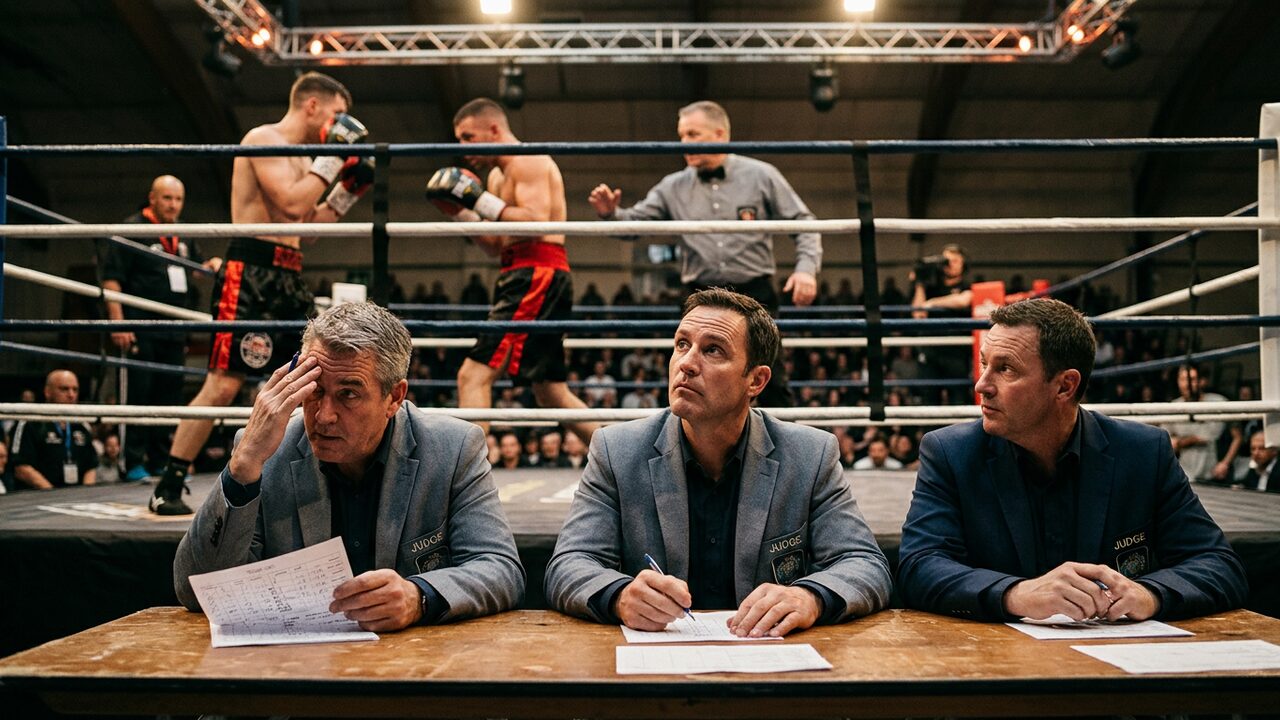
Three seats, three fights
Judges sit at fixed points around the ring, and a punch that lands cleanly from one angle can be partially blocked from another. Over twelve rounds these small differences in sightline accumulate into genuinely different impressions of who won, without any judge behaving improperly. The public tends to assume disagreement means error, but disagreement is close to guaranteed by the physical arrangement of the job itself, and it happens even when every scorer is competent and honest.
Criteria that resist precision
Judges are asked to weigh clean punching, effective aggression, defence and ring generalship, and none of these has a fixed unit of measurement. A fighter who walks forward all night looks busy; a fighter who counters sparingly but accurately may be doing the more skilled work while appearing passive. Reasonable people applying the same four criteria in good faith can reach different totals, which is exactly why sanctioning bodies use three independent judges rather than one.
Visibility bias in a subjective sport
Because scoring happens live and in real time, work that is easy to see tends to be rewarded over work that is merely effective. A looping shot that visibly snaps a head back registers more strongly than a tighter punch that does more actual damage but looks less dramatic. This bias is well known inside the sport, which is why trainers coach fighters to make their work visible to judges, a skill that has little to do with hurting an opponent and everything to do with being scored fairly.