
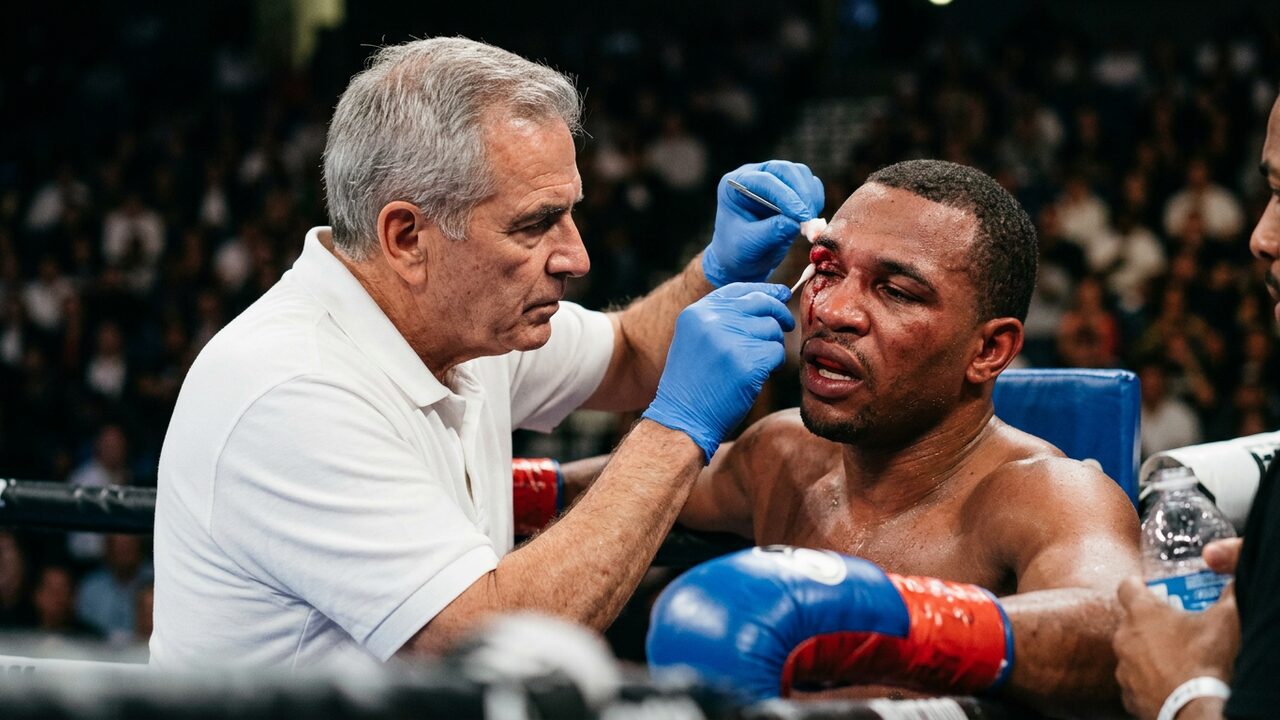
A minute against the clock
The cutman's job happens entirely within the same sixty-second break as everything else the corner does, applying pressure, cold metal and approved solutions to close a cut or reduce swelling before the referee waves the fighter back in. There is no possibility of extending the round for treatment, so the work has to be fast, precise and unaffected by the noise and adrenaline of a live fight.
Why a cut can decide a result
A ringside doctor can stop a fight if a cut is judged to threaten a fighter's vision or is bleeding badly enough to be dangerous, regardless of how the fight is going on the scorecards. This means a fighter who is comfortably ahead can still lose to a stoppage caused by an untreated or badly treated cut, which is why a good cutman is valued as highly as many trainers even though their visible role lasts only a few seconds per round.
A small, specialised trade
Because the skill is narrow but hard to learn well, a small number of experienced cutmen end up working across many different camps rather than being attached to a single fighter, building reputations independent of any particular boxer's career. Their presence in a corner is often read by insiders as a signal of how seriously a promotion is taking a fight's risk profile.