
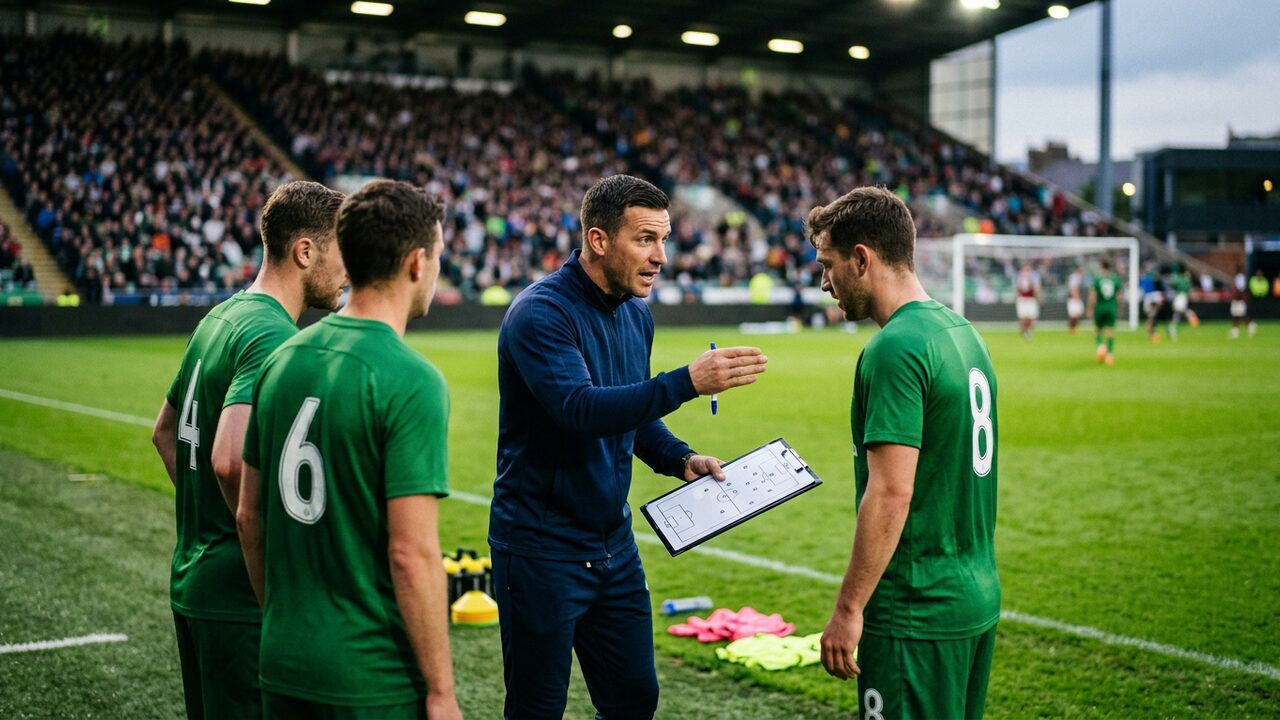
Less whiteboard than assumed
Popular imagination often pictures coaching qualifications as courses in advanced tactics, taught through diagrams of formations and pressing triggers, but the higher levels of professional coaching badges spend a great deal of time on subjects that have little to do with formations at all: man-management, communication under pressure, handling the media, and the psychology of a dressing room. This reflects the reality of the job, where the difference between managers is frequently less about tactical originality than about the ability to get a specific group of players to execute a plan consistently under pressure.
Session design as a core skill
A large component of coaching education concerns designing training sessions that isolate a specific problem and let players solve it through repetition in realistic conditions, rather than simply lecturing players about a tactical idea. This is treated as a genuine skill in its own right, since a session poorly designed can fail to transfer to matches even if the underlying tactical idea behind it is sound. Coaches are assessed heavily on their ability to translate an idea into a practical exercise that players can actually absorb on a training pitch under time pressure.
Tactics as a baseline, not the differentiator
Tactical knowledge is certainly assessed within coaching qualifications, but it tends to function as a baseline expectation rather than the differentiating skill the course is built to develop, since most candidates arrive with a reasonable grounding in tactics from playing or watching the game closely already. What separates candidates in practice is usually the ability to communicate an idea clearly, adapt it under real match pressure and manage the individuals required to carry it out, which is precisely why the courses spend proportionally less time on tactics than most outside observers would expect.