
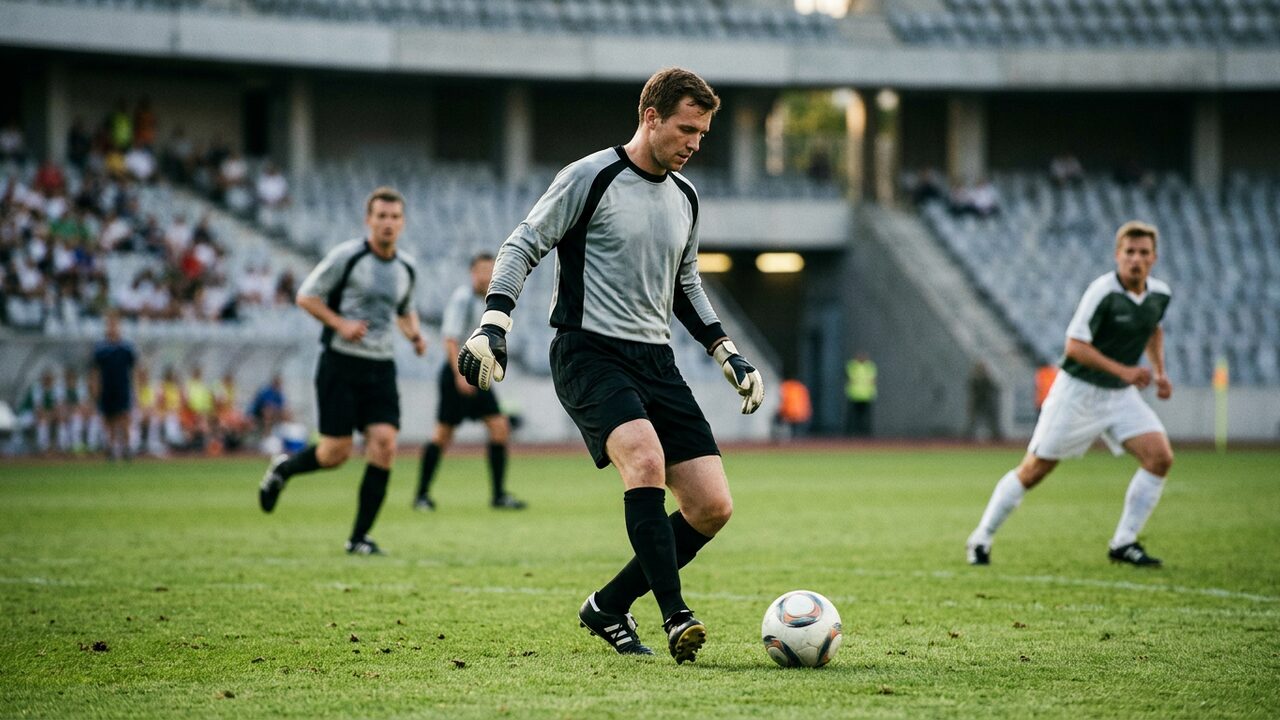
An extra outfield player in gloves
A goalkeeper comfortable passing under pressure allows a team to build attacks from deep rather than clearing the ball long whenever it is under pressure, effectively giving the side an extra outfield passer in situations that would otherwise force possession away. This is valuable because it keeps the ball and therefore keeps territorial control, but it asks something quite different of a goalkeeper than the traditional job description of shot-stopping and commanding the box, and not every excellent shot-stopper is comfortable receiving a pass with an opponent closing in from behind.
The trade a team accepts
The visible cost of this approach is the occasional high-profile error, a misplaced pass or heavy touch deep in a team's own half that leads directly to a goal, and these moments attract disproportionate attention precisely because a mistake by a goalkeeper is rarely recoverable. What is harder to see, and easy to underweight in the aftermath of an error, is the accumulated territorial and possession advantage the approach provides across the rest of a match, which statistically tends to outweigh the occasional costly mistake over a long enough sample of games.
Why the role is not universal
Not every team benefits from a goalkeeper built this way, and the decision should follow from a club's broader tactical identity rather than fashion. A team built to defend deep and counter-attack quickly gains comparatively little from a passing goalkeeper and more from pure shot-stopping and commanding crosses, while a team built around sustained possession depends on it. Judging a goalkeeper purely by comfort on the ball, without reference to what the team in front of them is actually trying to do, misses the point of the role entirely.