
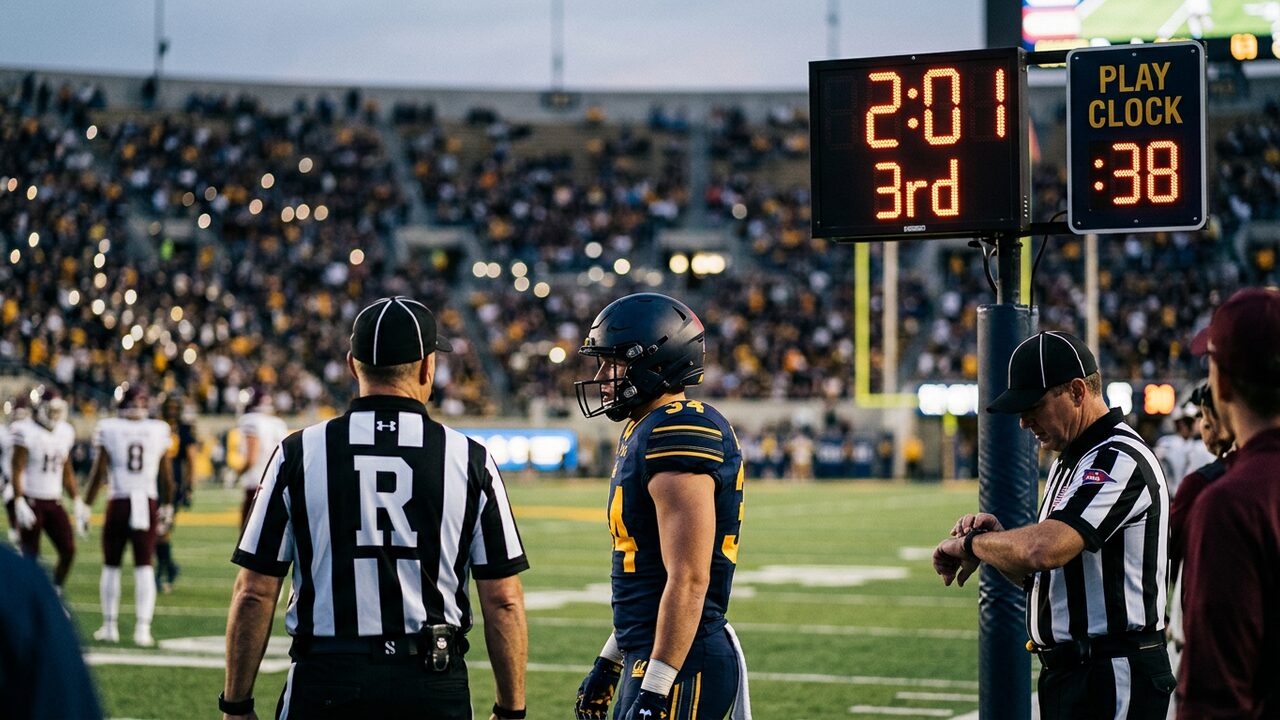
Small rule, large effect
Some of the least glamorous rules in the sport, governing exactly when the clock starts and stops after a first down or an incomplete pass, produce outsized effects on how a game actually unfolds. Rules that stop the clock more often generally produce more total plays and more possessions across a game, changing the rhythm of both offensive and defensive strategy relative to a version of the sport with fewer stoppages.
More plays, more opportunity and risk
A game with more total plays gives both offences and defences more opportunities to execute their strengths, which can favour teams with deeper rosters able to sustain performance over a longer contest. It also creates more opportunities for costly individual mistakes to occur, since each additional snap is another chance for a turnover or missed assignment. Coaches account for this when building a game plan, sometimes deliberately trying to shorten a game to reduce the number of plays their weaker unit faces.
Why the final minutes reward precision
Precise knowledge of exactly when the clock will and will not stop becomes most valuable in the final minutes of a close game, when a team trailing must maximise remaining plays and a team leading must run clock legally without unnecessary risk. Mistakes in this area, born of unfamiliarity with the exact rules rather than a lack of talent, have decided real games, which is why coaching staffs drill clock management as its own discipline separate from ordinary play calling.