
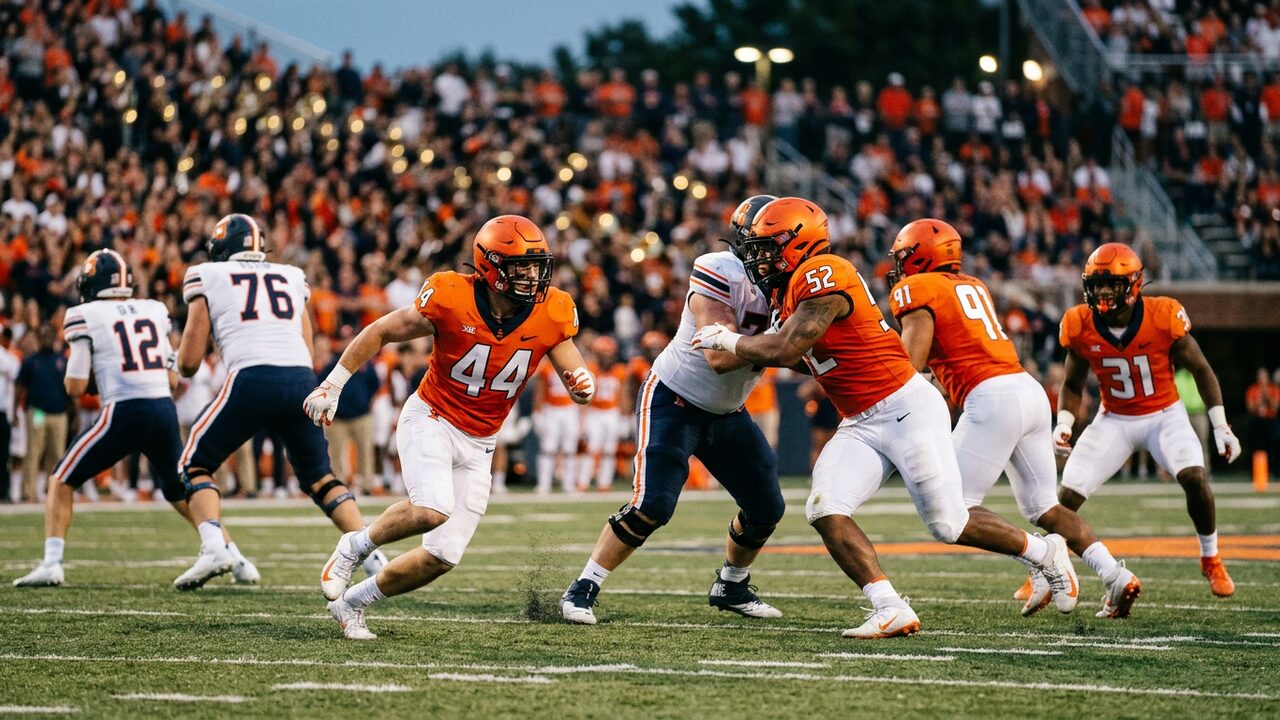
Space as the defensive problem
When an offence spreads receivers wide and empties the backfield, it is not simply changing where players stand; it is manufacturing space that a defence must now cover with the same eleven bodies it always had. A defensive front built to control the middle of the field against a compact formation can be stretched thin and slow to react against a formation designed to isolate defenders in open grass. The tactical problem spread offence poses is fundamentally about space, and defences had to solve it as such.
The rise of the hybrid defender
The clearest response has been the growth of hybrid roles that blend the coverage instincts of a defensive back with the physicality of a linebacker. These players are asked to defend space rather than a gap, tracking receivers and mobile quarterbacks across wide areas instead of anchoring against a traditional running attack. Their emergence reflects a genuine scheme problem: a defence with too many large, slow bodies simply cannot survive being spread across the width of the field.
A shift in what gets recruited
This tactical shift has quietly changed what defensive coaches look for. Speed and range now compete directly with raw size as prized traits, and programmes without access to that kind of athlete have had to find other ways to compensate, often through disguise and pressure designed to force a decision before spacing can be exploited. The spread-versus-defence contest is one of the sport's longest-running tactical conversations, and neither side has stopped adjusting to the other.