
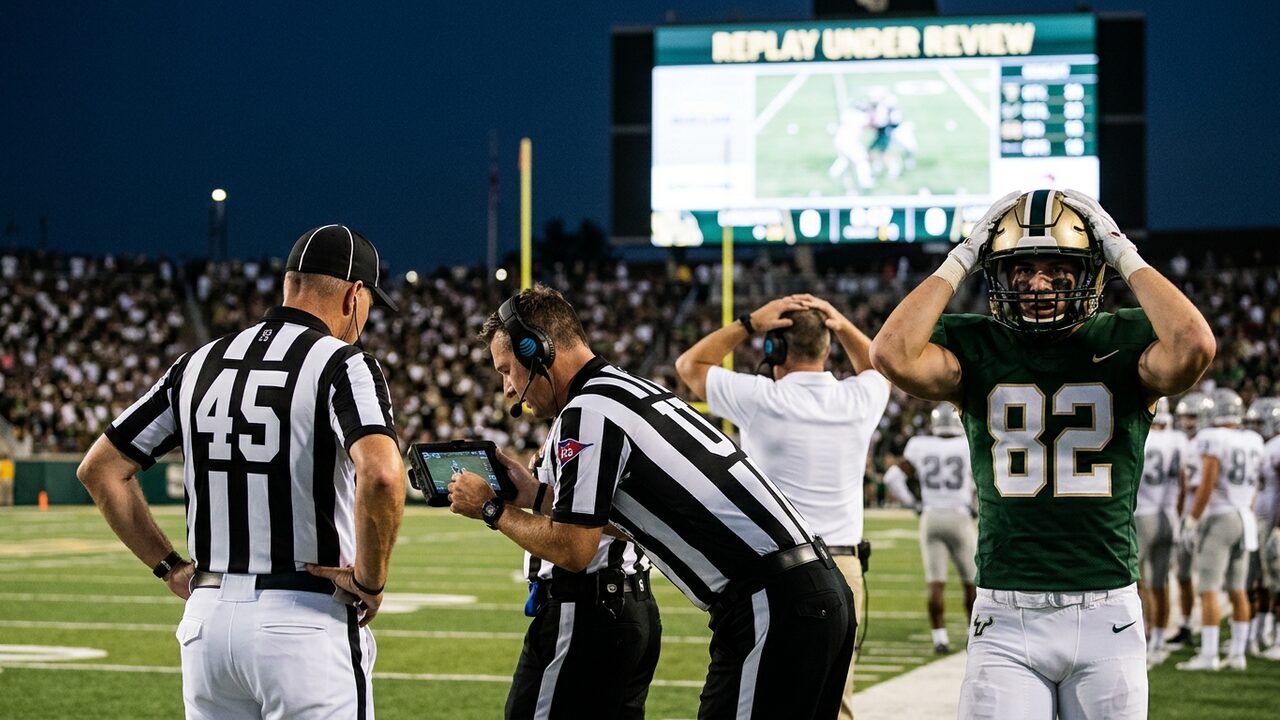
Where replay succeeds
Video review is genuinely effective at answering binary factual questions: did the ball cross the goal line, did a receiver's foot land in bounds, was the ball loose before a knee touched the ground. These are questions with a definite correct answer that a human eye at full speed can simply miss, and replay exists precisely to catch that category of error. On these calls, the technology has made the sport more accurate than it used to be, and there is little serious argument against it.
Where it cannot help
Many of the most contested calls, such as what counts as sufficient contact for pass interference or targeting, are matters of judgement rather than fact, and slow-motion replay does not resolve judgement disagreements; it sometimes sharpens them by showing the same ambiguous contact from another angle. Two reasonable officials can watch the identical replay and reach different conclusions, because the rule itself requires an interpretation that video cannot supply on its own.
Why the standard is deliberately strict
Most replay systems require clear and obvious evidence to overturn a ruling on the field rather than a simple majority of doubt, and that conservatism is deliberate. Loosening the standard would turn nearly every close play into an extended review without necessarily producing a more correct outcome, given how much of officiating rests on judgement rather than fact. Understanding this distinction is the most useful thing a viewer can take from any argument about a controversial call.