
Deferring the decision
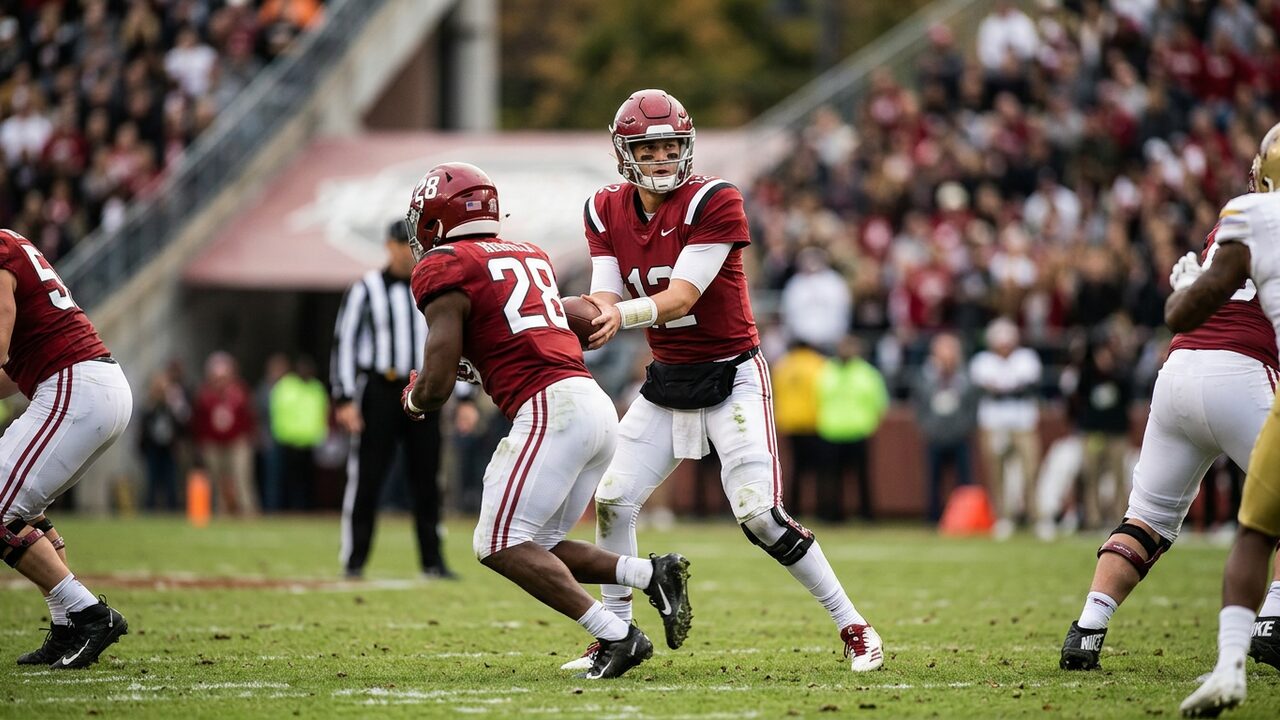
A conventional play call commits an offence to run or pass before the snap. The run-pass option delays that commitment, giving the quarterback a genuine choice based on how a single defender reacts once the ball is live. This is a small change in timing with a large tactical effect, because it removes the defence's ability to simply diagnose the call from formation and personnel alone. The defence is instead reacting to a play that has not fully decided what it is yet.
Making one defender wrong
The elegance of the concept lies in isolating one defender, often a linebacker or safety near the line, whose responsibility puts them in an impossible spot. If that player steps toward the run, the quarterback pulls the ball and throws behind them; if they hold their ground for the pass, the ball is handed off into space they vacated. There is no correct individual technique that solves both threats at once, which is precisely why coaches built the play around that defender rather than around a formation.
Part of a broader shift
The RPO's spread reflects a wider move in the sport toward offences that read defenders live rather than attacking a fixed defensive shape. It has pushed defensive coordinators to train players for disciplined, situation-specific reads instead of simple aggression, and it has blurred the old line between running and passing identities for many offences. Watching for which defender an RPO is designed to isolate is one of the more rewarding habits a newer viewer can develop.