
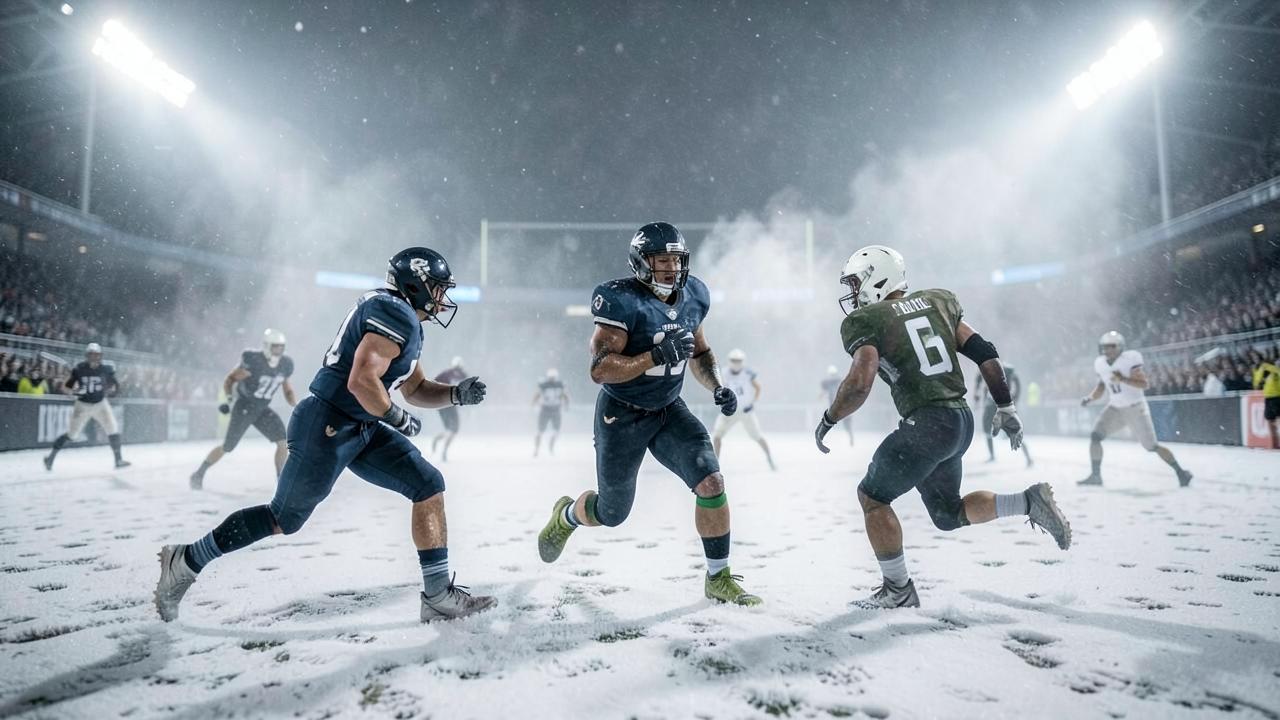
Wind punishes the passing game first
Strong or gusting wind disproportionately affects passing accuracy and distance compared with running plays, and it has an outsized effect on field goal and extra point attempts, where a small deviation in trajectory can be the difference between success and failure. Coaches facing difficult wind conditions frequently adjust their game plans to rely more heavily on the run and to treat scoring opportunities near the goal line with extra caution about settling for a kick.
Cold and wet conditions raise handling risk
Cold temperatures stiffen hands and reduce grip, while wet conditions make the ball itself harder to control, and both factors raise the likelihood of fumbles and dropped passes regardless of a team's skill level. This effect touches nearly every position on the field, from a receiver trying to secure a catch to a quarterback trying to grip the ball cleanly, and it tends to slow the overall pace of a game as coaches emphasise ball security over aggression.
A late-season advantage for some styles
Because these conditions punish finesse passing games more than physical running attacks, teams built around a strong offensive line and a capable running game can gain a genuine advantage as the season moves into its coldest weeks. This is one reason some programmes in colder regions have historically favoured run-heavy identities, since building a team around conditions that will inevitably arrive late in the year is a rational long-term strategic choice rather than a stylistic preference alone.