
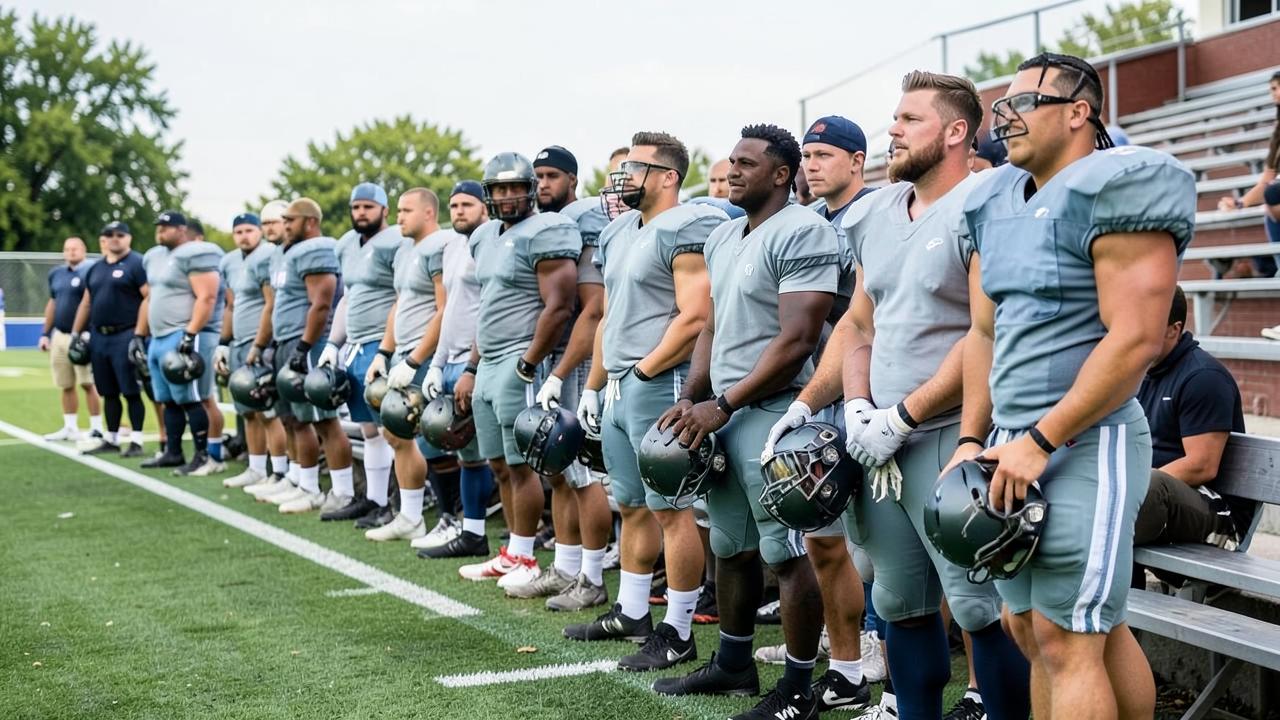
Depth gets tested by design
Over a season of contact football, injuries to starting players are not a remote possibility but a near-certainty for most programmes at some position. A team's published starting lineup therefore tells only part of the story; the more informative question is what happens when that lineup is disrupted, because it almost always will be at some point across a full season. Judging a team solely by its best available players ignores a large part of what determines how a season actually plays out.
The drop-off varies by position
The gap between a starter and the next player at a given position is not uniform across a roster. At positions requiring extensive scheme knowledge and timing, such as quarterback or offensive line, a drop-off in production after an injury tends to be larger than at positions where raw athleticism can substitute more directly for experience. Recognising which positions carry the steepest drop-off helps explain why certain injuries derail a season while others are absorbed with little visible effect.
Depth is a development outcome
Meaningful depth does not appear by accident; it results from recruiting enough players at each position and developing them even when they are unlikely to start immediately. Programmes that invest in that unglamorous work tend to withstand a difficult season of injuries far better than programmes that recruit narrowly for immediate starting needs. Watching how a team performs after losing a key player is often a more honest test of a programme's overall health than watching it at full strength.