
Noise as a tactical variable
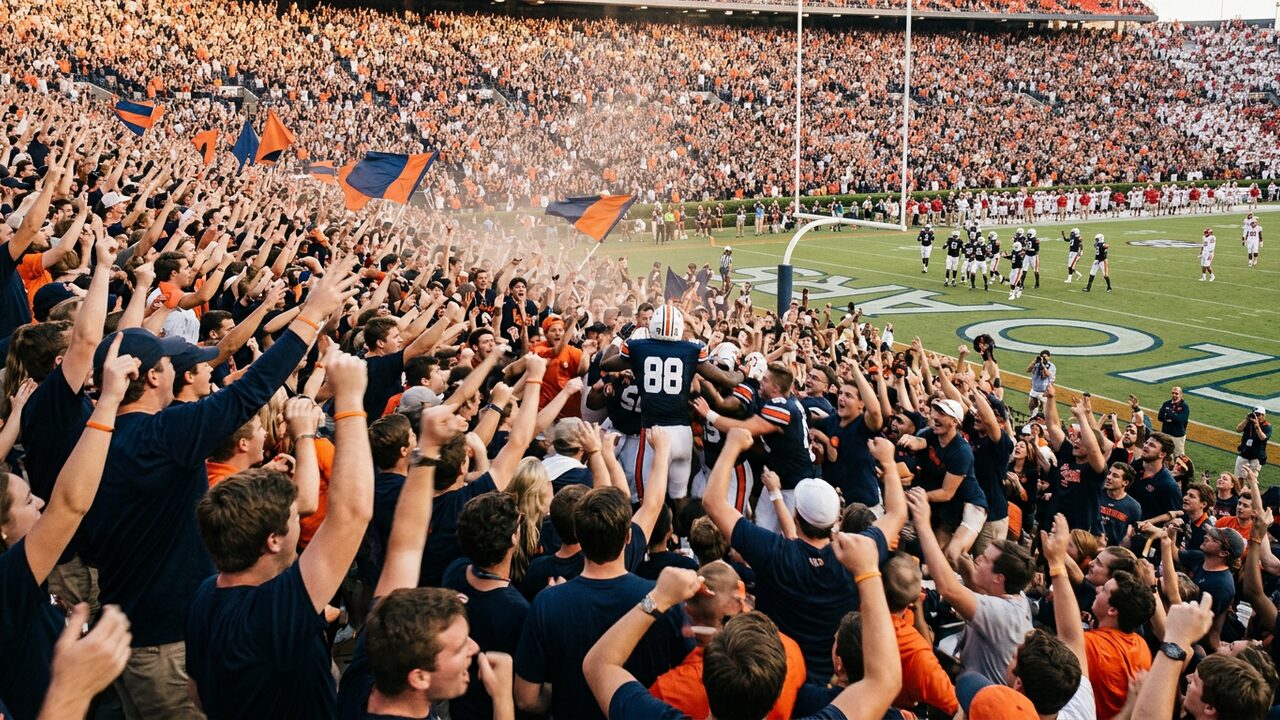
Many college stadiums are built with steep seating close to the field, which concentrates crowd noise onto the playing surface far more effectively than a shallower, more distant bowl would. That design choice is not accidental; it directly affects an offence's ability to communicate at the line of scrimmage, forcing silent counts and simplified calls that can slow a visiting team's execution. Noise in this context is not simply atmosphere; it is a measurable tactical burden imposed on the away side.
Communication under pressure
When verbal communication becomes unreliable, offences lose some of their flexibility to adjust at the line based on what they see from the defence, and mistakes such as false starts or missed protection calls become more likely. Coaching staffs prepare specifically for hostile environments with practised hand signals and predetermined plans, but preparation only partially offsets the disadvantage. This is one of the clearest ways a stadium itself becomes a competitive factor rather than a passive backdrop.
Distance as a physical cost
Beyond noise, the sheer geography of some conferences means visiting teams can face genuinely long journeys across time zones on a short turnaround. That travel is a physical cost layered on top of the game itself, affecting recovery and preparation time in ways that are easy to underestimate from a television broadcast. Programmes that manage travel logistics well, through scheduling charter timing and practice adjustments, can turn a difficult trip into a manageable one rather than a hidden disadvantage.