
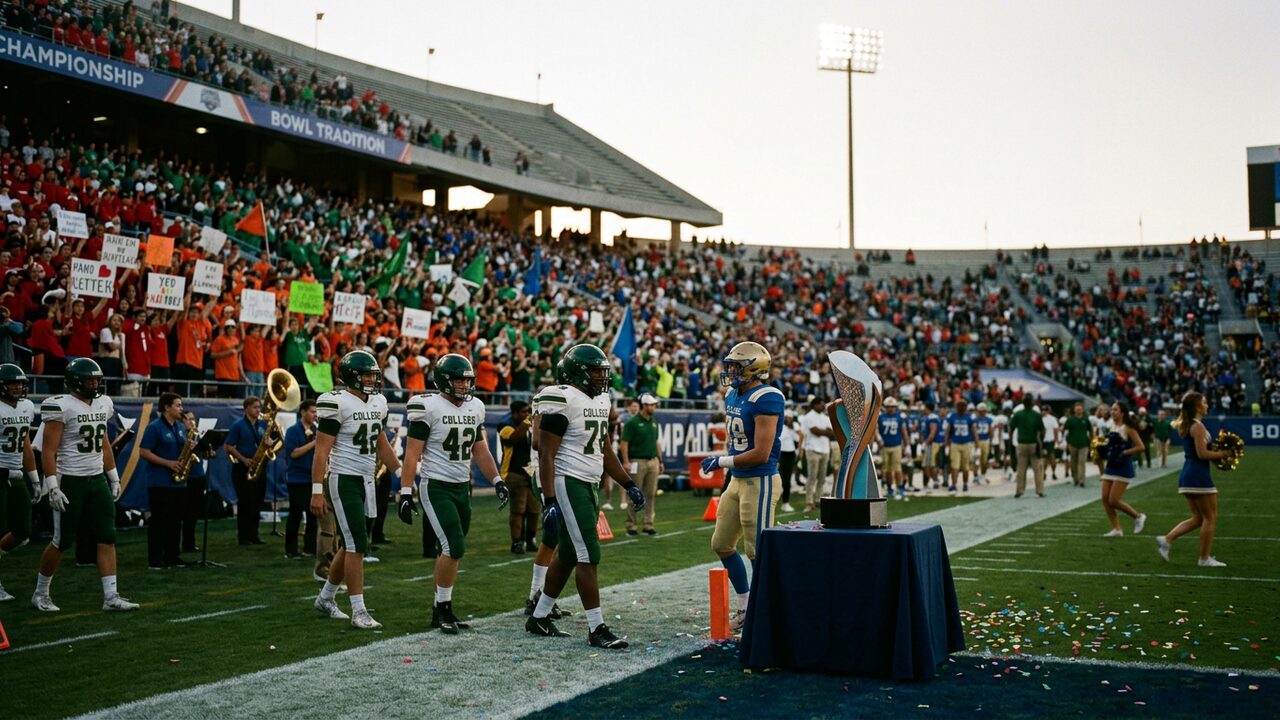
Civic origins, football attraction
Many bowl games began as regional promotional events, pairing a civic festival with a football game as the attraction that drew visitors and attention to a city or region. That origin still shapes the culture surrounding many of these fixtures, which often include days of local events built around the teams before the game itself. Viewers judging a bowl purely as a sporting contest are missing half of what the event was designed to be.
A reward as much as a contest
For many teams, simply qualifying for a bowl is treated as an achievement in itself, separate from whatever happens in the game. Reaching the threshold of eligibility after a difficult season can be presented internally as a successful year regardless of the bowl result, and the extra practice time a bowl bid grants is often valued for player development as much as for winning the game. This reward framing sits oddly alongside major postseason contests, which is part of why bowl season contains such a wide range of stakes.
Different games, different motivation
Because motivation varies so widely, from a programme's biggest game in years to a lower-stakes reward trip, a single standard cannot fairly judge all bowl games at once. A team missing key contributors due to graduation timing or a coaching change may treat a bowl very differently from one still building serious postseason momentum. Reading motivation correctly is often more informative than reading the matchup on paper.