
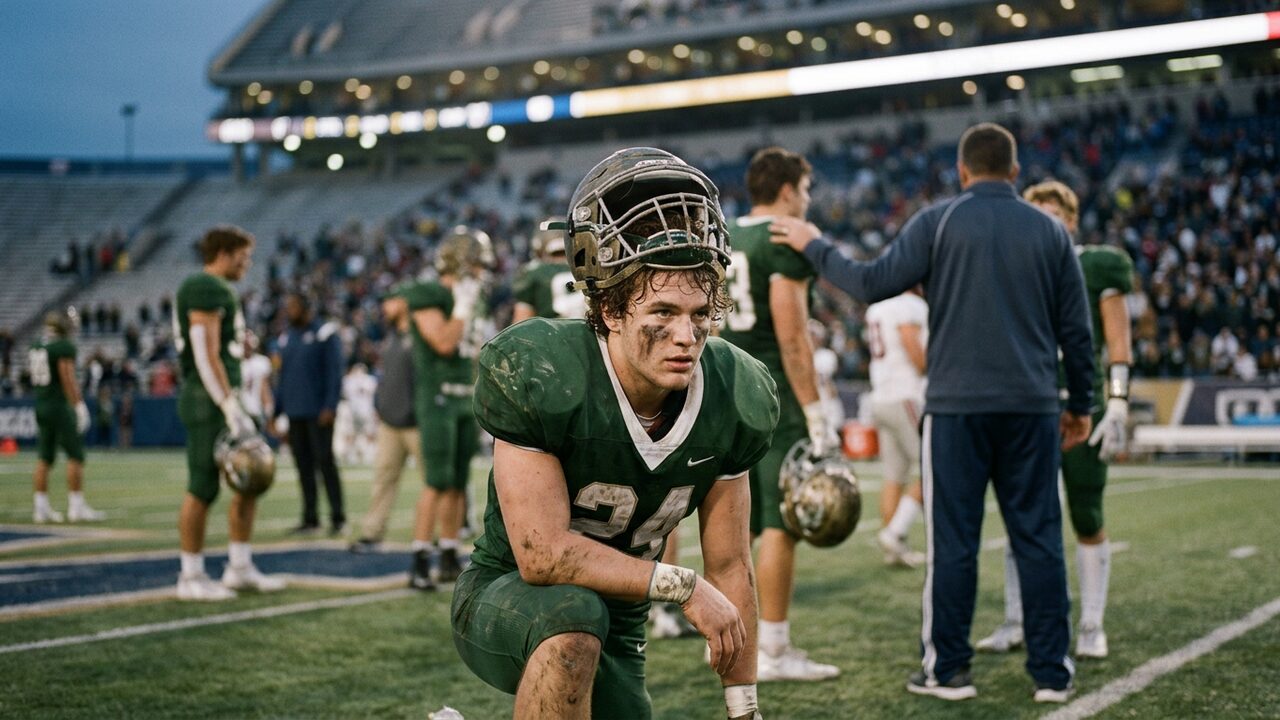
Physical demands on developing bodies
Many players enter the sport still in their late teens, physically capable enough to compete but not yet fully matured, and are immediately asked to withstand a full-contact collegiate schedule alongside intensive strength training. This combination of ongoing physical development and serious athletic demand is unusual outside sport altogether, and it places real responsibility on medical and conditioning staff to manage workload sensibly rather than simply maximising short-term performance.
Two full commitments at once
Alongside the physical demands, players are also full-time students, expected to attend classes, complete coursework and maintain academic eligibility while training and travelling on a schedule that would be demanding for an adult with no other obligations. Balancing these two genuinely serious commitments, each of which alone would occupy most young adults fully, is one of the least visible burdens the sport places on the people playing it.
Public scrutiny arrives early
Because the sport carries substantial public and media attention, young players can face public criticism, second-guessing and expectation at an age when most people in other fields are still learning their craft privately. That scrutiny is a genuine feature of the environment rather than an unfortunate side effect, and it is worth remembering, in any discussion of a player's performance, that the person being discussed is often still very early in both an athletic and a personal sense of maturity.