
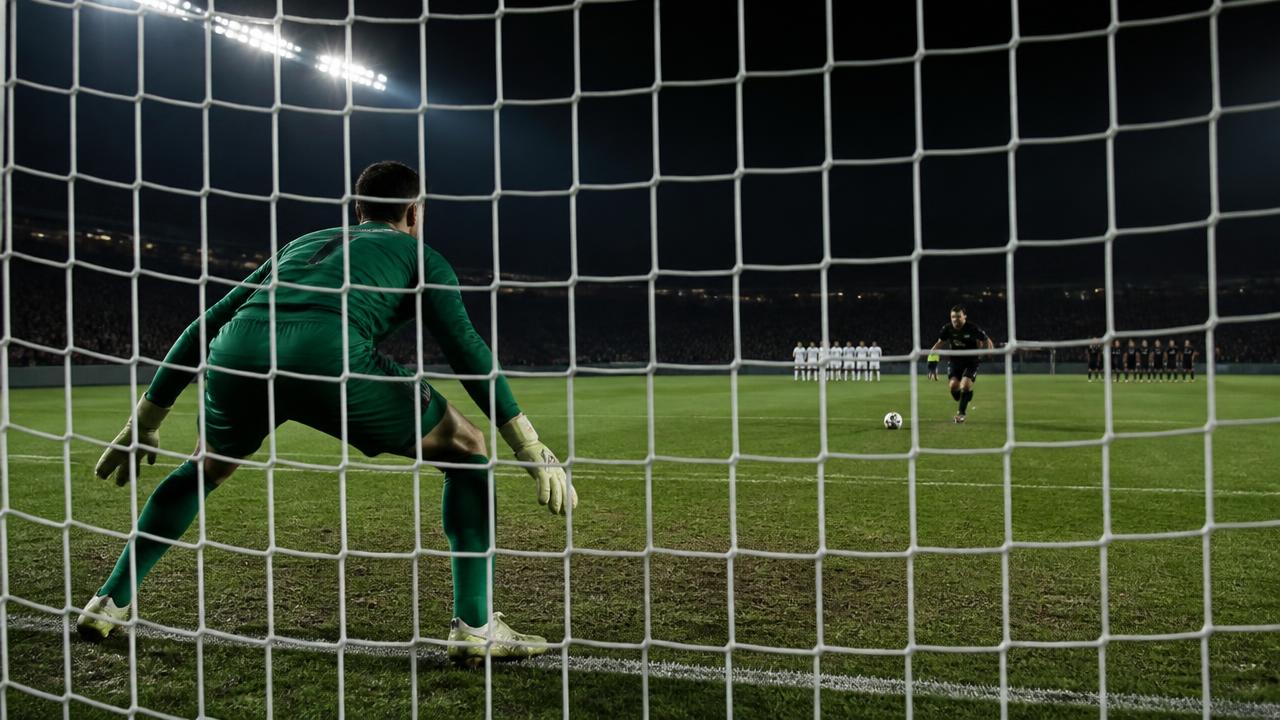
Variance is the underdog's ally
Over a league season, the better team wins because its advantages accumulate across dozens of matches. A single tie removes that accumulation: one deflected goal, one save, one refereeing decision can settle it, and no amount of superiority in the other eighty-five minutes recovers the situation. Underdogs do not need to be as good as the favourite; they need to make the range of plausible outcomes wide enough to include their own victory.
That is why organised, low-risk plans are so common in these ties. Keeping the score at nil is not defeatism, it is the mechanism by which a smaller club stays in a match long enough for variance to do its work.
Restarts and structure over possession
In a match where a smaller club may see very little of the ball, the routes to scoring narrow to counter-attacks and set pieces. A side with a genuine dead-ball threat and a coach who has drilled two or three routines has a repeatable way of hurting a superior opponent, which possession-based ideas cannot offer it. Defensively the same logic applies: a compact block that concedes crosses from wide areas is making a deliberate bet about which chances it can survive.
Favourites who are unprepared for this find themselves dominating territory while creating little, and their frustration becomes part of the story of the tie.
The favourite's harder test
The stronger side faces conditions it rarely encounters in the league: a smaller pitch, a hostile crowd close to the touchline, an opponent with nothing to protect, and an occasion the home club has built its season around. Managing that requires patience, an early goal or an unusual level of composure, and squads rotated heavily for a cup fixture often lack the leadership to supply any of the three.
None of this means upsets are common. It means they are far more likely than a comparison of squads would predict, which is precisely what makes the competition worth watching.