
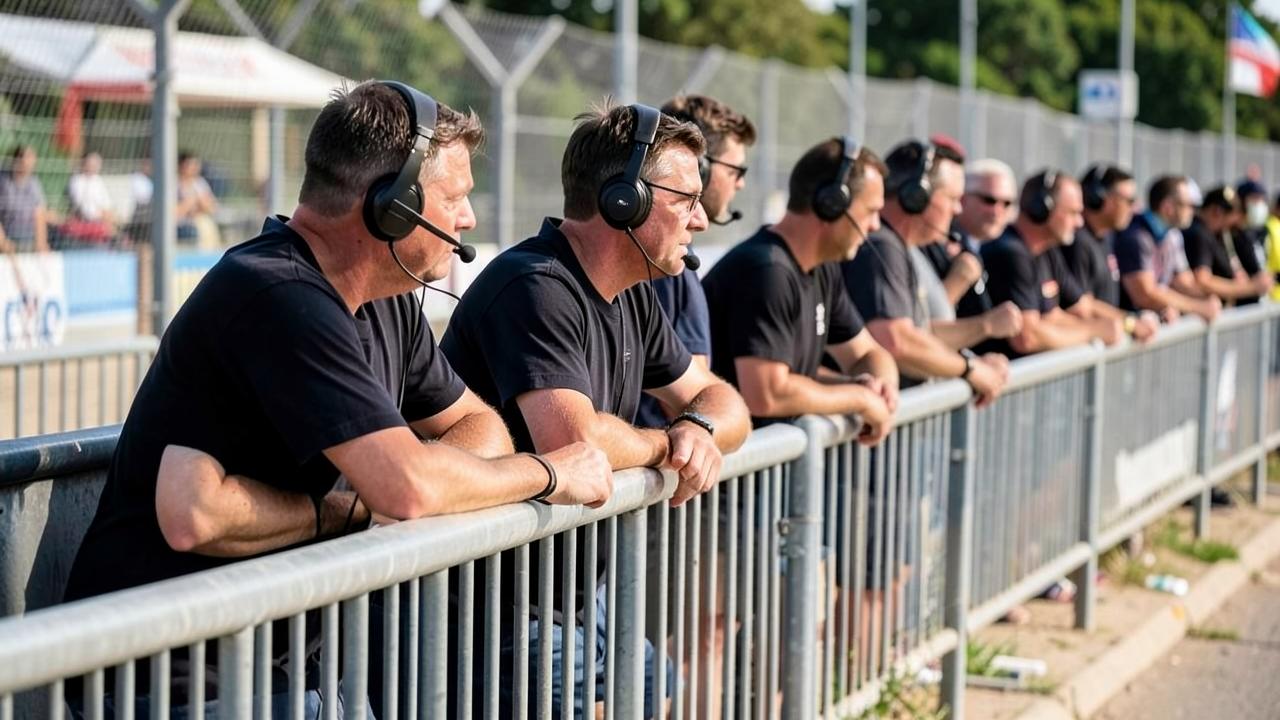
A small visible slice of a bigger process
What fans hear over team radio is a compressed summary of a much larger, continuous process happening on the pit wall, where strategists are constantly updating models of tyre wear, gaps and rival behaviour. By the time a message reaches the driver, it usually reflects a decision that has already been checked against several scenarios, even though the radio exchange itself sounds brief and almost casual.
What the driver adds that data cannot
Strategists rely heavily on telemetry, but a driver's own description of how the tyres feel, whether they are sliding, graining or simply losing response, adds information that sensors do not fully capture, and that feedback can override a model's prediction. This is why race engineers ask pointed questions about feel rather than simply reading numbers back to the driver; the answer genuinely changes the plan.
Why the language stays so short
Radio messages are kept deliberately brief because a driver's attention during a race is a scarce resource, and a long explanation risks distracting from the immediate task of driving the car safely at speed. The brevity is not a sign the decision behind it was simple; it is a sign that a team has agreed in advance on a shorthand precise enough to convey a complex call in very few words.