
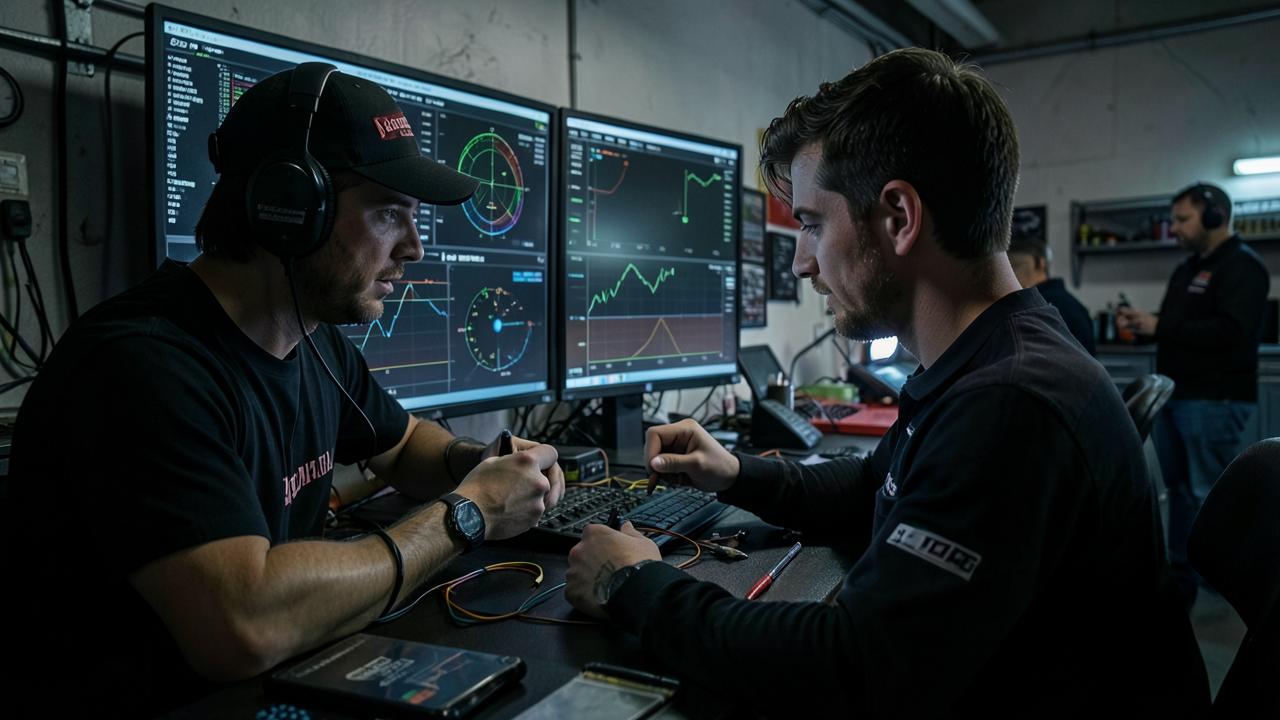
Rehearsing before arrival
Long before a car reaches a circuit, teams run detailed simulations to explore setup options, tyre behaviour and strategy scenarios, since actual track time is heavily restricted by the rules and far too scarce to use for open-ended experimentation. This work narrows the range of setups worth trying once the car is physically on track, turning limited practice sessions into confirmation exercises rather than open searches.
The difficulty of matching the model to the road
The hardest part of simulation is correlation, making sure the virtual model's predictions actually match how the real car behaves once it is running, since small discrepancies compound across a lap. Teams invest heavily in refining this link, and a team whose simulator is well correlated arrives at a circuit with a genuine advantage over one that has to spend practice time discovering basic setup answers.
Why this still leaves decisions for the weekend
Even excellent simulation cannot capture everything a real track will present, from unexpected temperature swings to changes in grip from other categories running the same surface, so on-track work still matters. What good preparation buys a team is fewer unknowns to resolve live, freeing engineers to focus practice time on the handful of questions simulation genuinely could not answer in advance.