
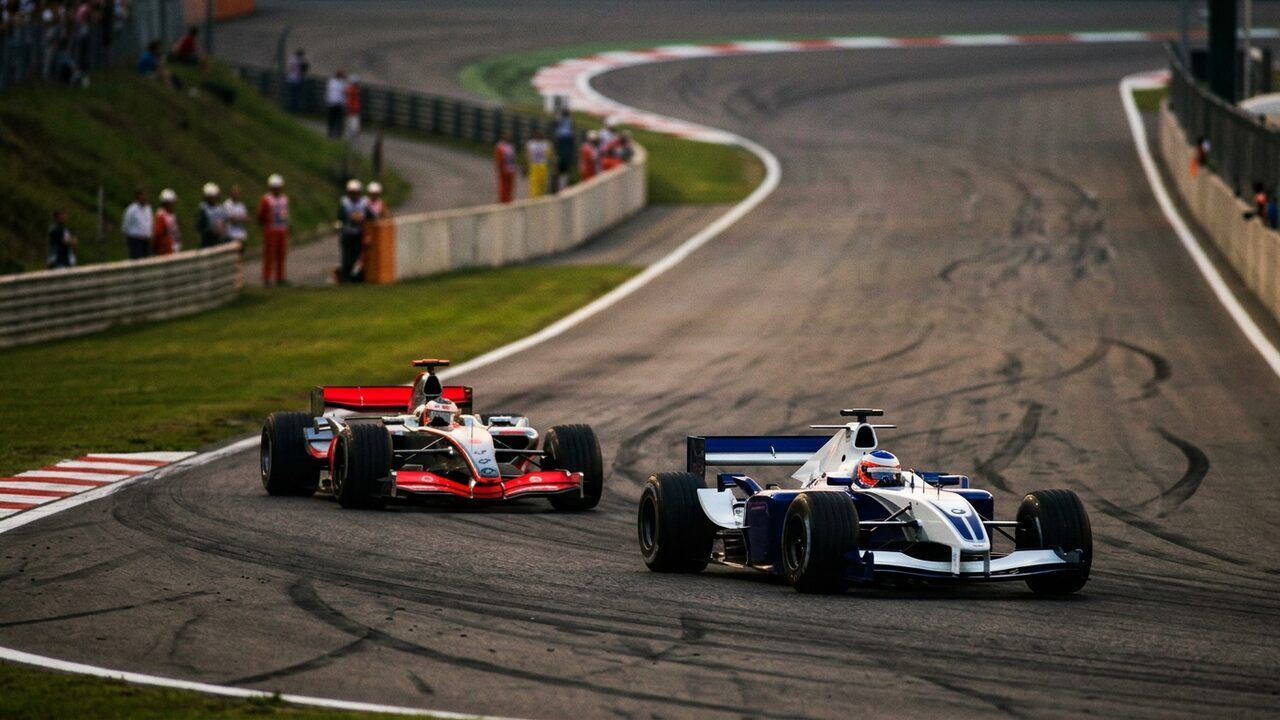
The basic template designers use
A long straight leading into a tight, slow corner is one of the most reliable ways to create overtaking opportunities, since it gives a following car enough distance to close a gap using a slipstream or DRS and enough braking zone to attempt a pass safely. Circuit designers deliberately place such combinations where they think racing needs help, which is why new or revised layouts are so often built around one or two key braking zones.
Corner sequences as a subtler tool
Beyond single passing zones, the sequence of corners leading into a straight matters just as much, since a car exiting a preceding corner poorly loses the straight-line speed needed to challenge into the next braking zone. Designers sometimes shape these sequences specifically to reward committed, clean exits, effectively building the overtaking opportunity several corners before the pass itself would occur.
The limits imposed by safety
Every design choice made to encourage overtaking has to sit within safety requirements around run-off, barrier placement and escape routes, which constrains how aggressively a designer can chase a particular racing outcome. This is why some circuits often praised for producing good racing were not built with modern overtaking theory in mind at all; their layouts predate it, and newer circuits are still catching up to what those older layouts achieved by accident.