
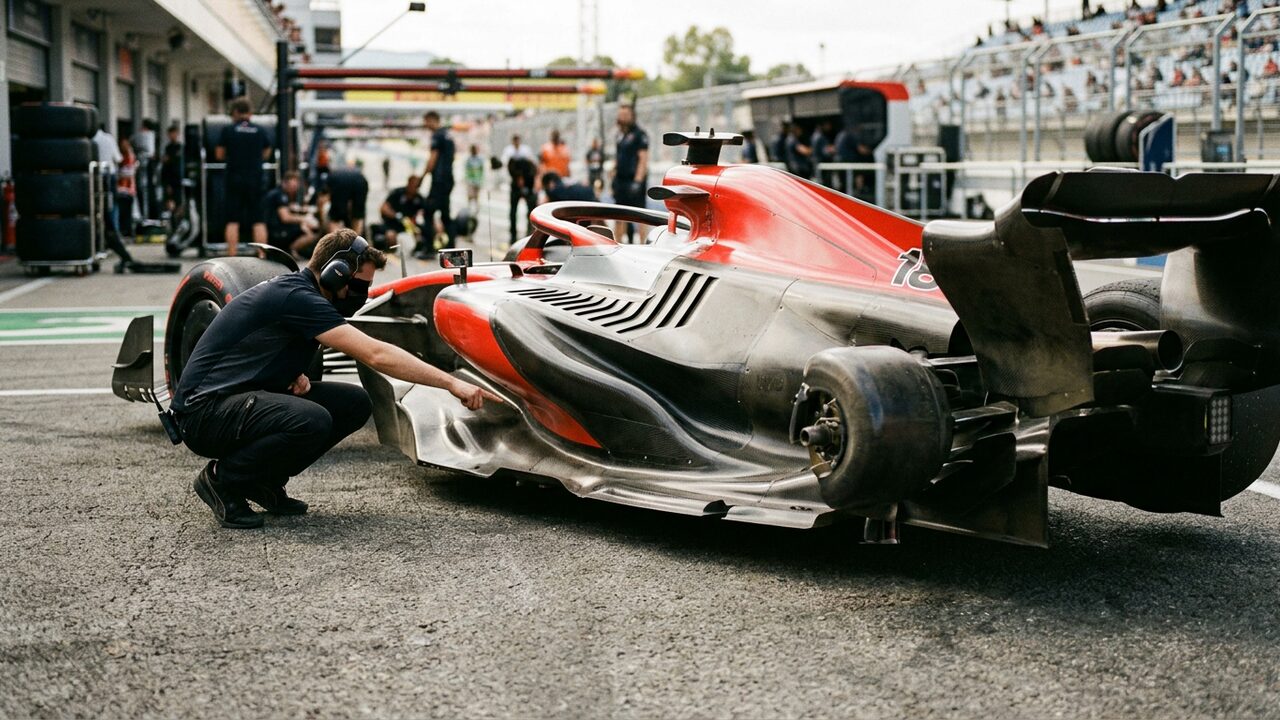
Downforce from underneath
Ground effect works by shaping the underside of the car into tunnels that accelerate airflow, and faster-moving air exerts less pressure, which effectively sucks the car toward the track. This produces downforce with comparatively little drag penalty, making it an efficient way to generate grip compared with wings alone, which always trade some straight-line speed for the downforce they create.
A double-edged sensitivity
The same tunnels that make ground effect efficient also make it sensitive to ride height, since the airflow underneath depends heavily on how close the floor sits to the track surface. Small changes from kerbs, bumps or fuel load can shift the car's balance more than a wing-based setup would, which is part of why cars built around this principle can behave unpredictably over certain surfaces or in certain conditions.
Why the sport brought it back
Regulations were rewritten to lean more heavily on underbody airflow partly because it was thought to be less disruptive to the air left behind for a following car than heavy wing-generated downforce. Whether that goal is fully achieved is a genuinely open question that depends on many other design choices teams make around the rules, but the underlying intent, encouraging closer racing by changing how downforce is produced, is a useful lens for understanding why the change was made at all.