
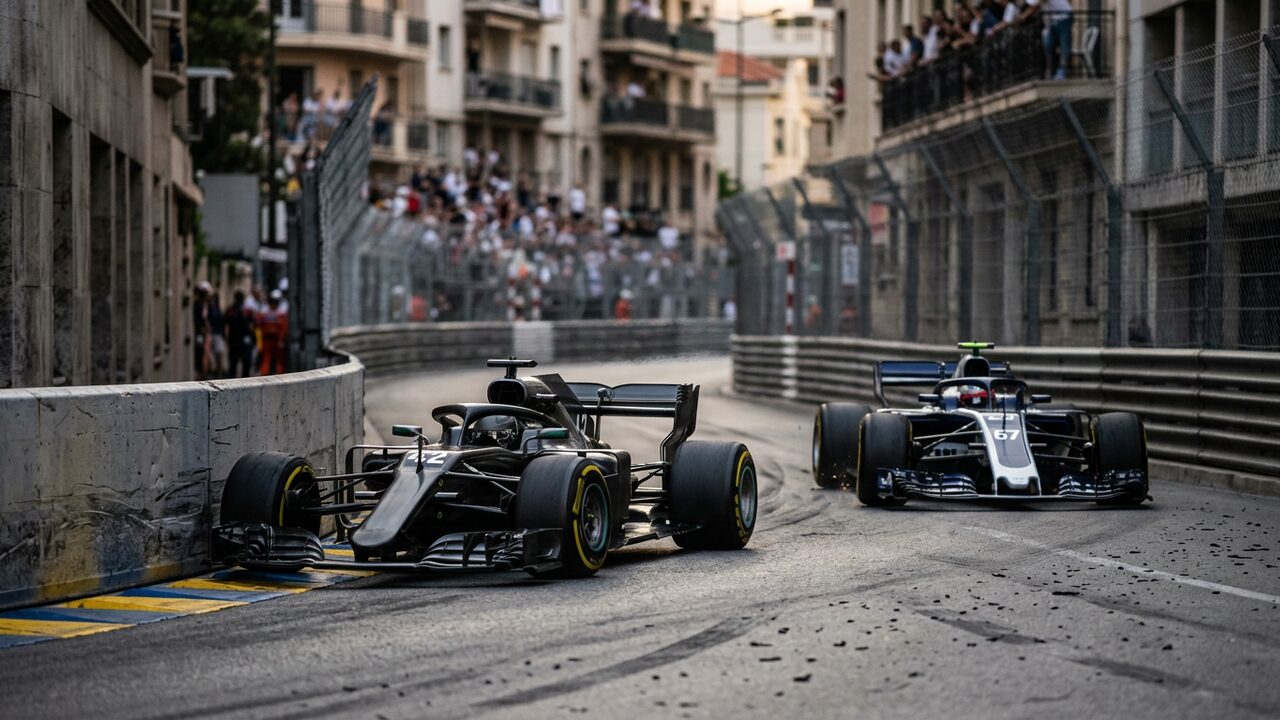
Walls change the calculation
Street circuits are built from public roads closed for the event, which usually means barriers sit much closer to the racing line than on a purpose-built track, leaving little margin for a small mistake. This raises the cost of error dramatically, since a slide that would cost time on a permanent circuit can end a session against a wall on a street course, and drivers adjust their margins accordingly through practice.
Surface and layout differences
Permanent circuits are generally designed with consistent surfaces, wider run-off areas and corners engineered around known aerodynamic and overtaking requirements, giving engineers more predictable data to work from race to race. Street circuits, by contrast, often have bumpier surfaces from everyday road use and tighter, more improvised layouts, which can reward mechanical grip and low-speed traction over the outright aerodynamic efficiency that suits a flowing permanent lap.
Why teams set cars up so differently
Because the risks and surfaces differ so much, teams often bring distinct setup philosophies to street events, prioritising stability and traction over outright cornering speed, and drivers who excel on one type of layout do not automatically transfer that form to the other. Recognising which type of circuit is coming up is one of the more reliable ways to anticipate which characteristics of a car will matter most that weekend.