
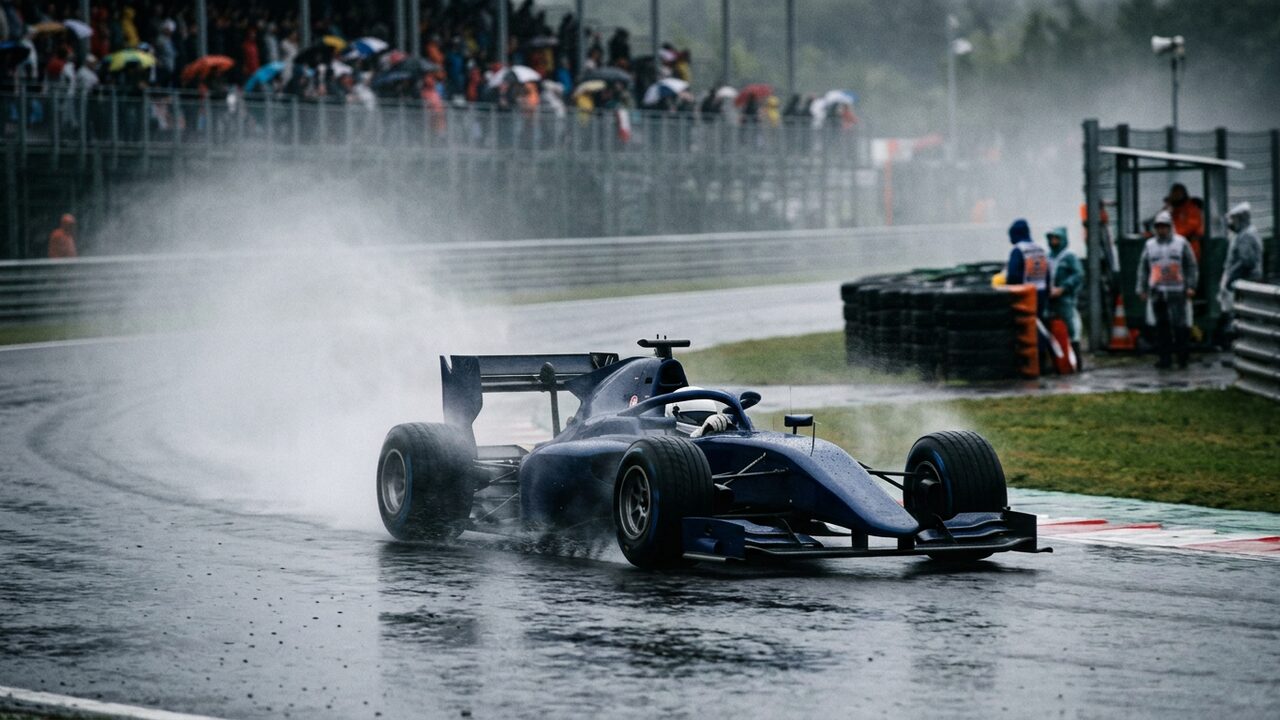
Grip becomes a moving target
In the wet, the amount of grip available can change from one lap to the next as rain intensity varies and the racing line either washes clean or gathers standing water, meaning a setup that works on one lap can feel wrong on the next. This makes wet running far less about pre-calculated data and far more about a driver's ability to feel what the car is doing and adjust in real time.
A strategy conversation that never stops
Because conditions can shift within a single race, teams have to continually reassess whether intermediate or full wet tyres remain the right choice, and switching too early or too late can cost significant time either way. This turns a wet race into an extended live negotiation between the pit wall's weather information and the driver's direct feedback from the car, with neither source fully reliable on its own.
The added safety dimension
Reduced visibility from spray, particularly behind other cars, adds a genuine safety consideration to wet racing that has nothing to do with pace, which is part of why safety cars and red flags are more common in these conditions. Drivers who are respected for wet-weather skill are usually praised not just for speed but for judgement, knowing when to push and when the conditions simply do not allow it.