
Stopping first to jump ahead
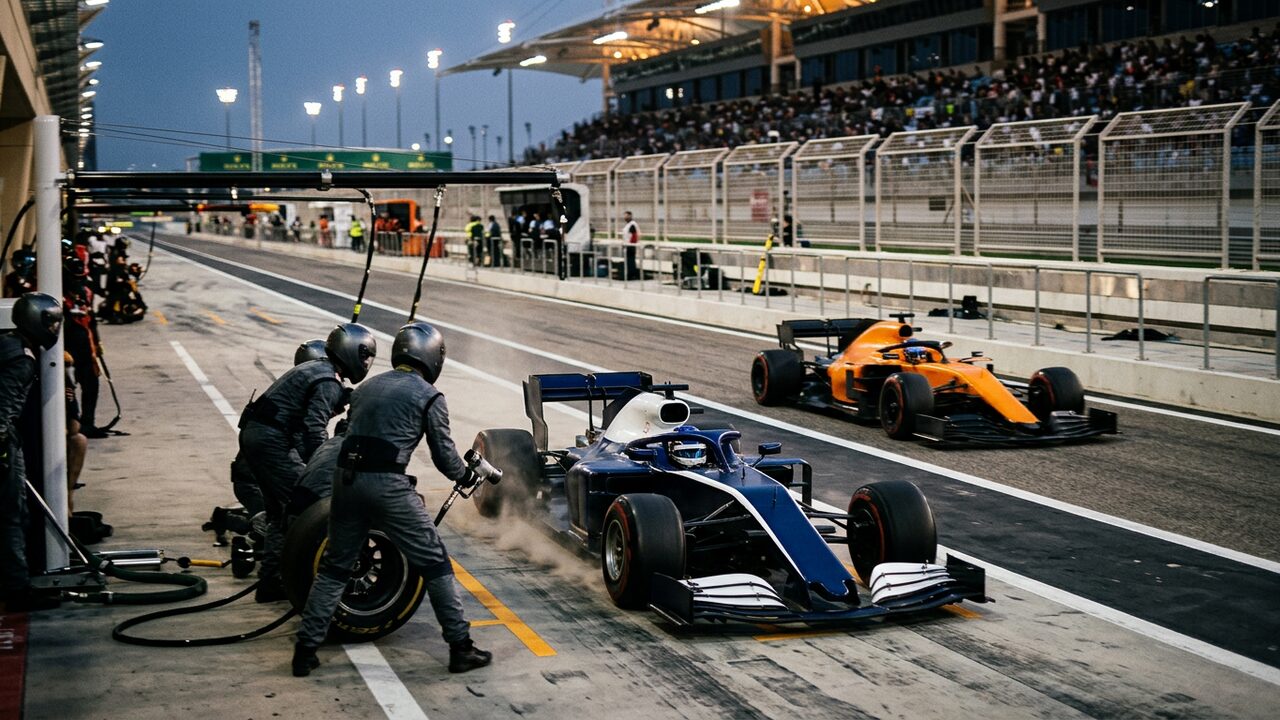
The undercut works by pitting before a rival, fitting fresh tyres and using their extra grip to set faster laps while the rival is still on worn rubber, hoping to emerge ahead once the rival eventually stops. It relies on the pit lane being clear enough that the stop itself does not cost too much time, and on fresh tyres delivering an advantage quickly enough to matter within just a few laps.
Staying out to gain by patience
The overcut does the opposite: a driver stays out longer than a rival, banking clean laps on a track now free of the car that has pitted, and hopes those extra laps outweigh the rival's tyre advantage. It works best when track position is hard to lose through following traffic and when the driver's own tyres are holding up better than the model predicted, turning patience itself into the strategic weapon.
Why neither is automatically correct
Choosing between them depends on live information that is never complete: how much life is left in a rival's tyres, how clear the pit lane will be, and how the track's grip is evolving lap by lap. This is why identical situations produce different calls from different teams, and why so much post-race argument concerns strategy rather than pace. The tools are simple; the judgement applied to them is where races are genuinely won or lost.