
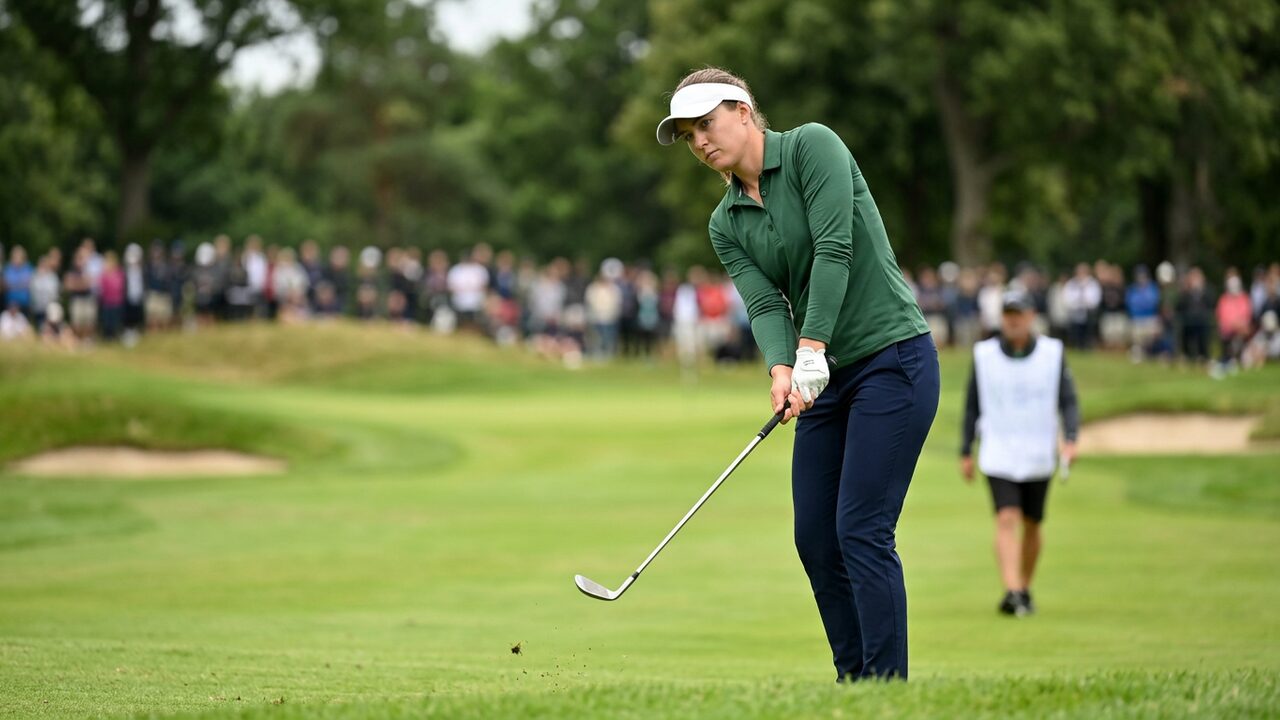
The scoring zone is unforgiving
Inside roughly a hundred and thirty yards, professionals expect to hit the green regularly, which means the real contest is not whether the ball arrives but how close it finishes to the hole. A few yards of error at that range is the difference between a routine putt and a difficult one, so wedge play is judged on precision in a way that longer clubs, with their wider natural dispersion, simply are not.
Trajectory decides the finish
Carrying a wedge the right distance is only half the job, because how the ball lands determines where it finishes. A shot with heavy spin can check up quickly or even release backward, while a lower, flatter shot will run out further after landing. Players deliberately vary spin and trajectory to suit the pin position and the firmness of the green, which is why identical carry distances from two players can still finish very differently.
Why pressure exposes it first
Full-swing technique tends to hold up reasonably well under tension because the motion is large and rehearsed thousands of times identically. Touch shots are more fragile, since they rely on feel and small adjustments in tempo that tension disrupts easily, which is why wedge distance control is often the first skill to fail under pressure and the clearest signal of a player who is genuinely composed late in a tournament.