
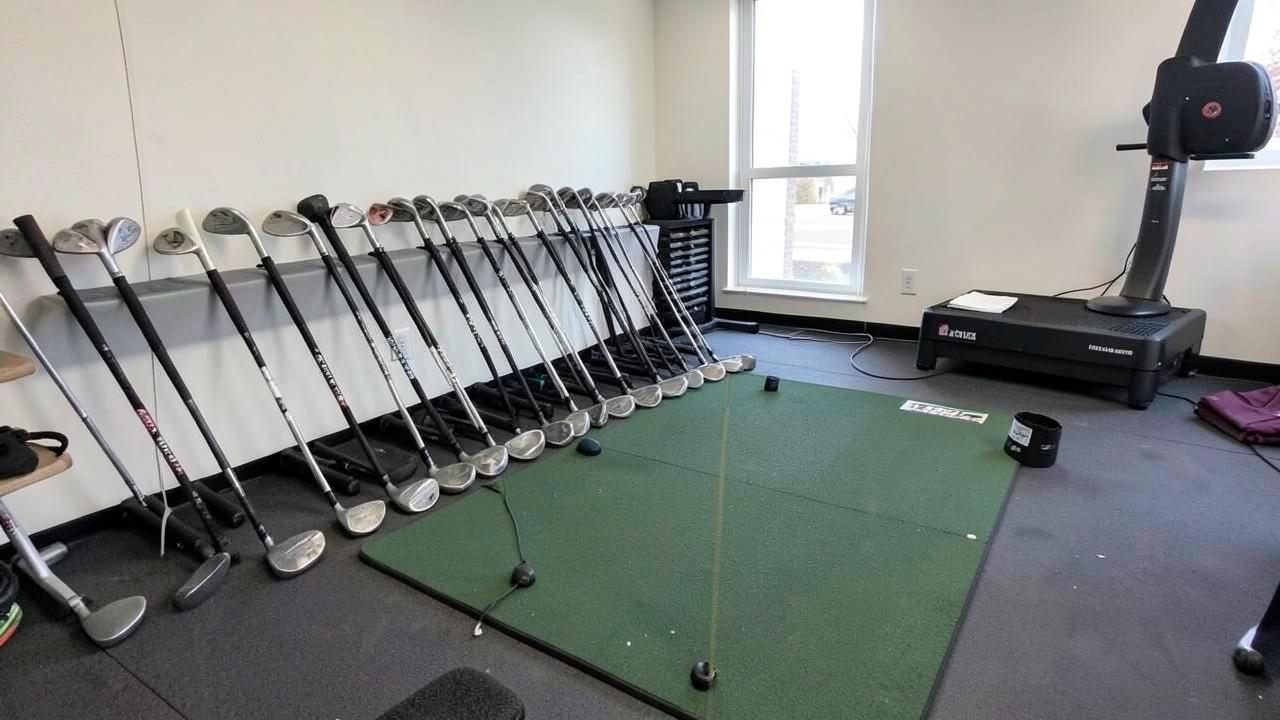
The shaft matters as much as the head
A club's performance depends heavily on how its shaft's flex and weight match a specific swing speed and tempo, and a shaft too stiff or too soft for a given swing can waste much of a well-designed clubhead's benefit. Off-the-rack clubs are built around average specifications that suit a wide range of swings adequately but very few swings ideally, which is why fitted equipment routinely outperforms an identical off-the-shelf model for the same player.
Lie angle quietly controls direction
An incorrect lie angle, the angle between the shaft and the ground at address, can send the ball consistently left or right regardless of an otherwise sound swing path, because it changes where the clubface points at impact. This is one of the most common and most overlooked fitting errors, since a player can spend years adjusting their swing to compensate for a fault that actually sits in the equipment rather than the technique.
Data over marketing
Fitting sessions using launch monitors provide objective comparisons between clubs that marketing claims alone cannot offer, since two clubs advertised similarly can behave quite differently for the same player's specific swing characteristics. This is why serious fitting is treated as measurement rather than shopping: the goal is finding what the data shows performs best for one particular swing, not choosing whichever club carries the most convincing reputation.