
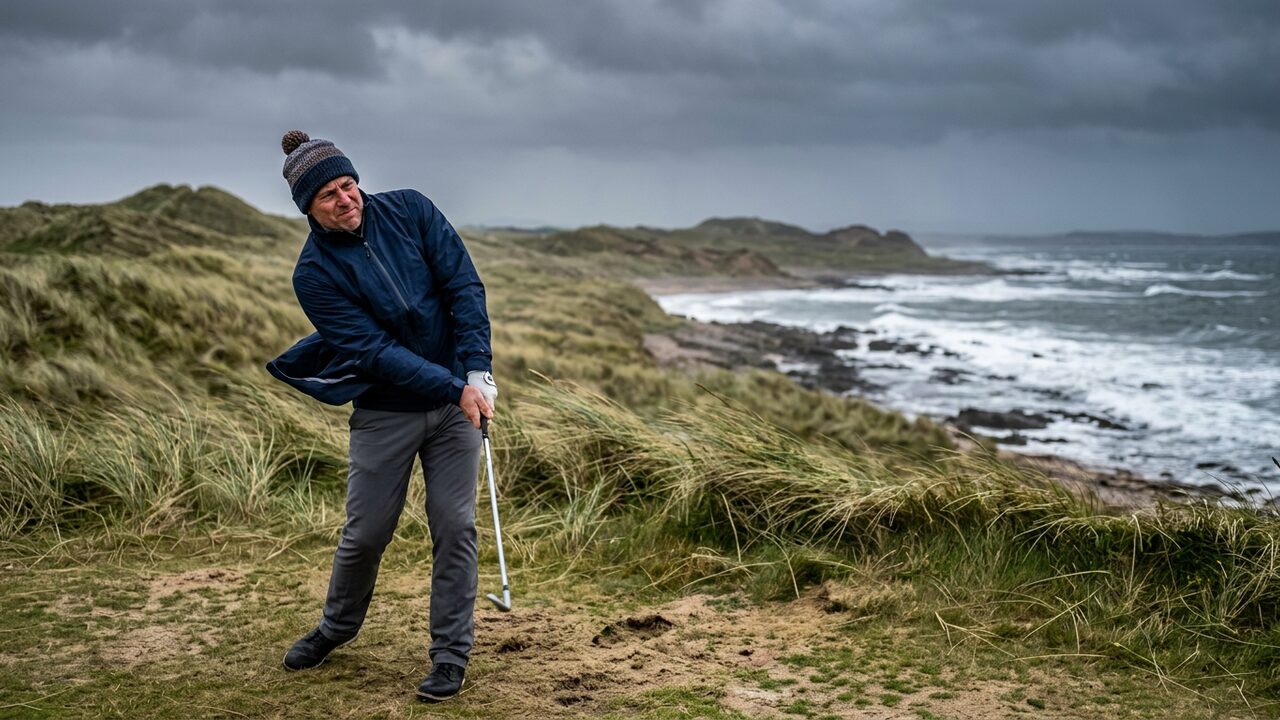
Ground that will not hold a shot
Links courses sit on sandy, well-drained coastal soil that stays firm even after rain, so the ball rarely stops where it lands the way it does on a soft parkland green. Combined with almost no tree cover to block the wind, this firmness means the ball is exposed to gusts for longer and reacts to the ground once it arrives, so a shot's flight and its bounce both matter, not just where it was aimed.
Why low and controlled beats long
In steady coastal wind, a low, penetrating shot flies more predictably than a high one, because it spends less time exposed to the crosswind and gusting above the dunes. This is why players skilled in links conditions favour a punched or knocked-down shot even when a full, higher trajectory would carry further in still air. Distance without control becomes a liability, since a longer shot held up in the wind for longer simply drifts further off target.
A course that changes by the hour
Because wind direction and strength shift through a single day, the same hole can play as a short iron in the morning and a long iron by the afternoon, with no change to the course itself. That volatility is precisely what separates links golf from most other formats: preparation can tell a player what a hole demands in theory, but only the conditions on the day decide what it demands in practice, which rewards adaptability over memorised yardages.