
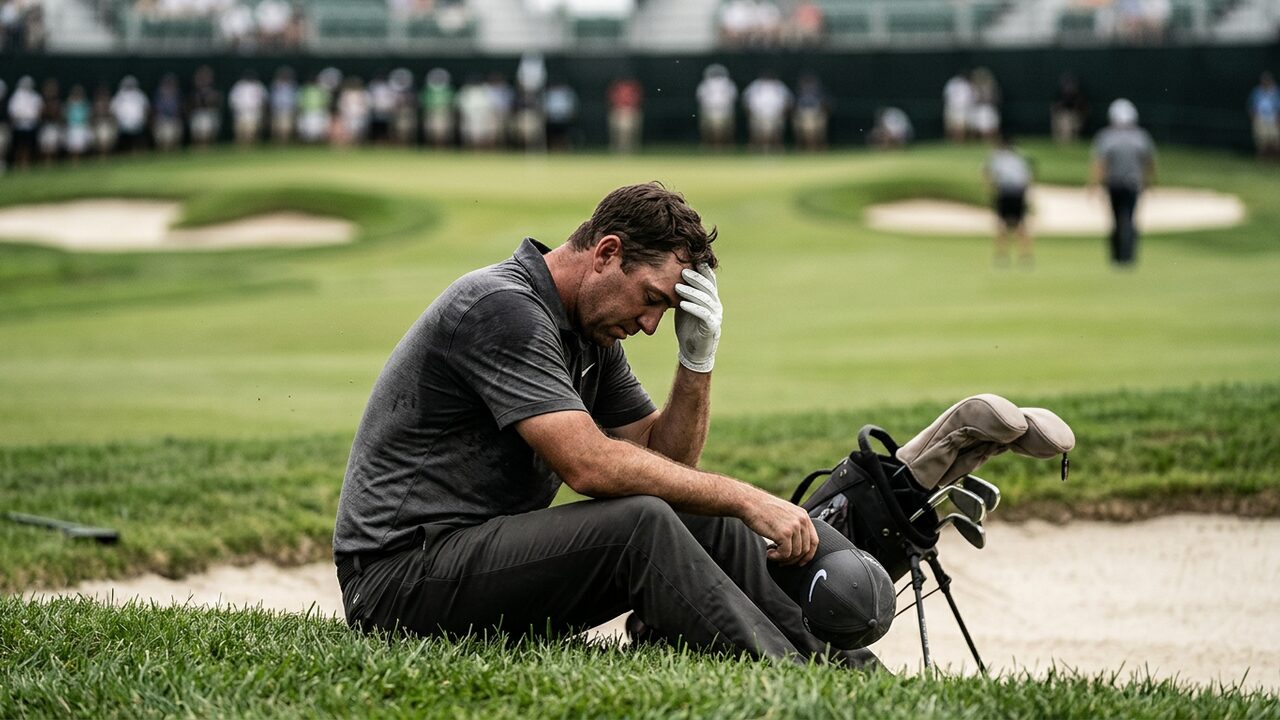
Decisions, not exertion
A round of golf is physically undemanding compared with most professional sport, yet it is mentally dense, requiring a fresh decision on club, line, and strategy for every one of around seventy shots, plus the walking and waiting between them. That repeated decision-making, sustained over four or five hours, draws on concentration in a way that raw fitness does not measure, and it is concentration, not stamina, that tends to visibly decline first across a long day.
Fatigue that compounds daily
Because a tournament runs across four consecutive days with little recovery time, mental fatigue from one round does not fully reset before the next begins. Small lapses in focus that would be harmless in isolation start to accumulate, and players commonly describe the final round of a long week feeling harder to concentrate through than the first, even when the course and conditions have not changed at all.
Tension as its own opponent
Beyond simple tiredness, the tension of contending adds a separate mental cost that has nothing to do with the number of shots played. Sustaining composure while aware of a leaderboard, over several hours and several days, is its own form of exertion, which is why players who strike the ball just as well under pressure as in practice are often described as having the best temperament in the game, rather than the best swing.