
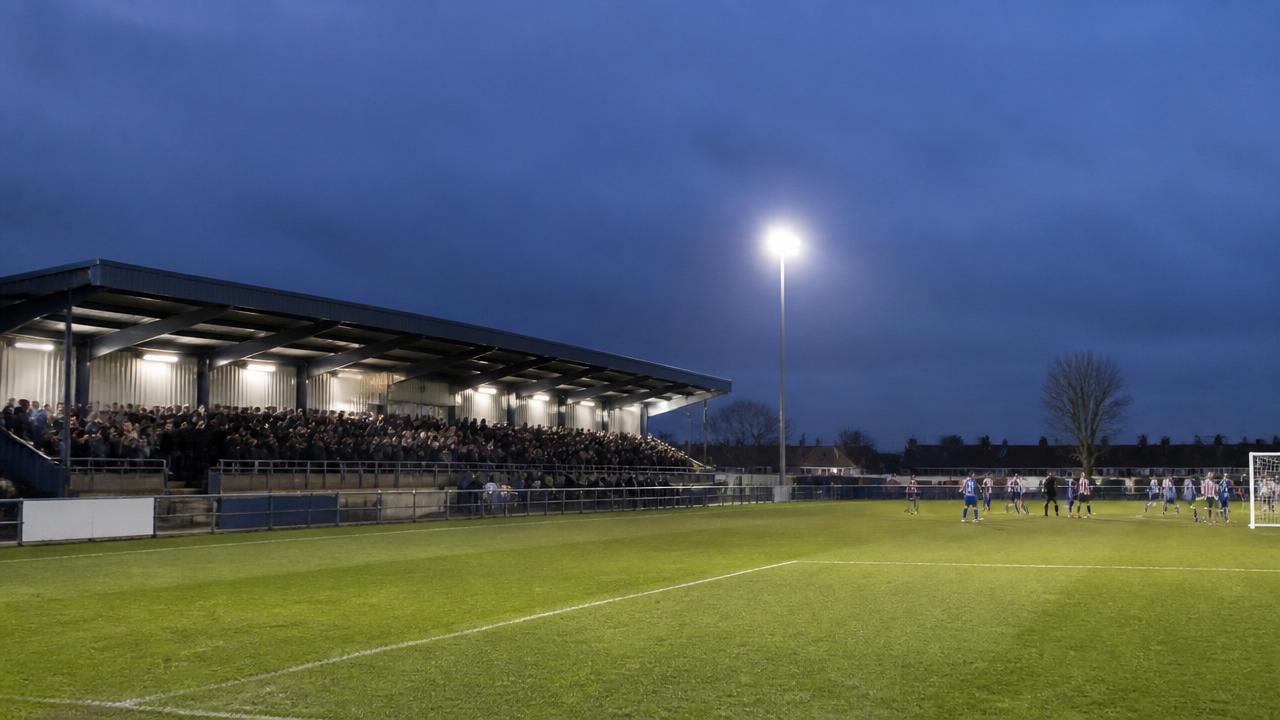
One league, a whole country
Running a third tier as a single national division rather than regional groups raises the standard and the cost at the same time. Clubs travel the length of the country for midweek fixtures, which means overnight stays, coaches, lost working days for staff who are not full-time, and a fixture calendar that leaves little recovery. For a club promoted from a regional league, that logistical jump is often a bigger shock than the football.
The upside is a genuine national competition where a small club can host a former champion, and where the level of opponent is consistent rather than dependent on which region a club happens to sit in.
Licensing forces professionalism
Third-tier clubs face licensing requirements covering stadium standards, floodlighting, medical provision and financial documentation. Meeting them is expensive and unavoidable, and it explains why some clubs that win promotion on the pitch struggle to take their place: the football was the achievable part. Boards that plan two seasons ahead, upgrading facilities before they are forced to, arrive far better prepared.
It also filters out clubs run on optimism. That is harsh on supporters, but a division where half the fixtures were at risk of not being fulfilled would be worse for everyone.
The financial trap
The characteristic third-tier failure is a club that promotes, raises its wage bill to compete, and finds the revenue does not follow. Attendances rise less than expected, the travel bill is larger than modelled, and one season of overspending leaves debts that outlast the squad that created them. The clubs that last are usually the ones that treated their first season as survival rather than as a platform.
That conservatism is unpopular in the summer and vindicated by February. It is also the difference between a club that becomes established at the level and one that appears for two years and disappears.