
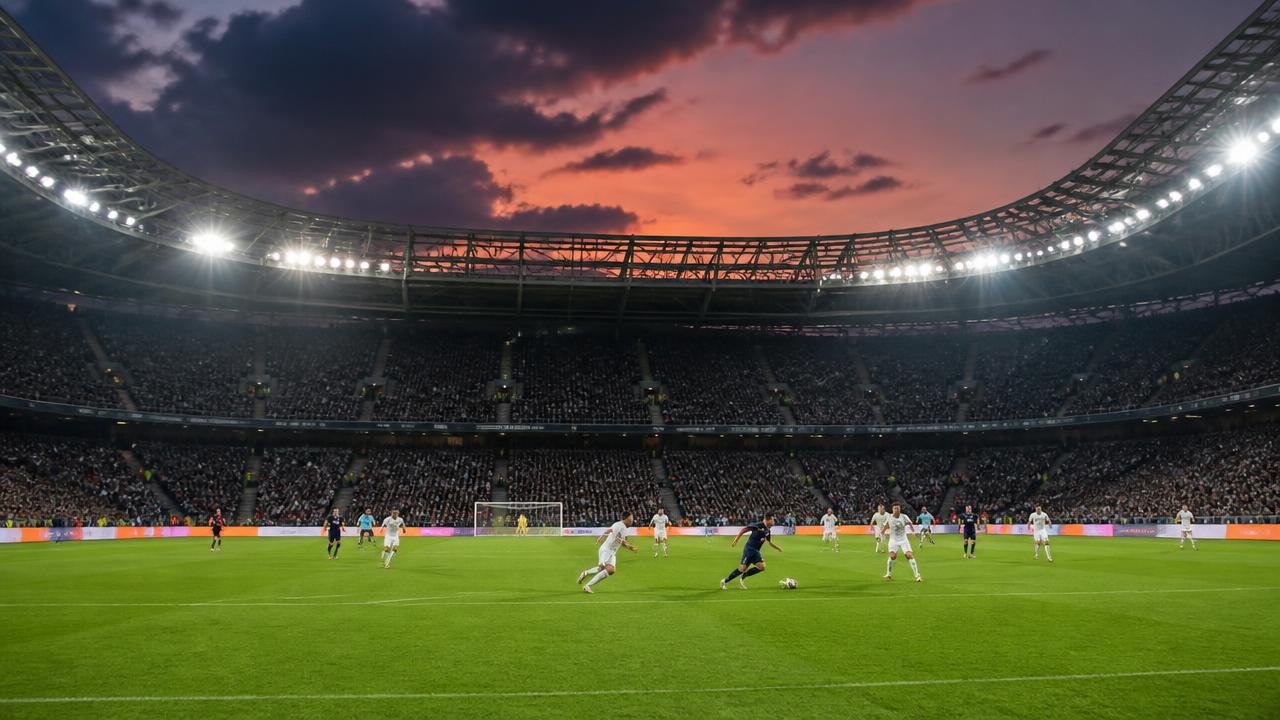
The first defender sets the trap
A press begins with one player closing a defender down at a deliberate angle. He is not usually trying to take the ball; he is trying to remove one passing option so the opponent plays where his own team wants the ball to go, normally towards a touchline where space runs out. Watch the angle of that approach rather than the speed of it, because a fast run made from the wrong side simply invites the pass it was meant to prevent.
This is why pressing can look lazy and still be working. A forward who jogs across the pitch to block an inside pass has done his job if the centre-back plays a long ball down the line that a full-back is already waiting for. Effort is visible; direction is what actually matters.
Judge the second and third runners
If the first press is joined within a second by the nearest midfielder and the wide player on that side, the team is pressing. If it is not, one player is chasing and ten are watching, which is the most common way a good idea becomes a goal conceded. French sides at their best are aggressive in these follow-up runs, partly because squads carry athletic midfielders who can cover the ground twice in the same move.
The tell for a well-drilled team is the far side of the pitch. When the ball is being squeezed on the right, the left winger should be tucking in towards the centre rather than holding his own touchline, because the pass that punishes a press is the switch to the space nobody is guarding.
What is happening behind the ball
Every press leaves something exposed, and the coaching question is what. Sides that press with confidence usually keep a spare defender behind the line and ask their goalkeeper to sweep the space in front of him, so a ball played over the top has to be perfect rather than merely long. When that structure is missing, the same press that looked dominant for twenty minutes starts producing one-on-one chances against.
So when a French match turns chaotic after half-time, resist the reading that the team simply got tired. More often the opponent has found the pass that beats the first line, the follow-up runners have stopped arriving on time, and the plan is still on but the conditions for it have gone.