
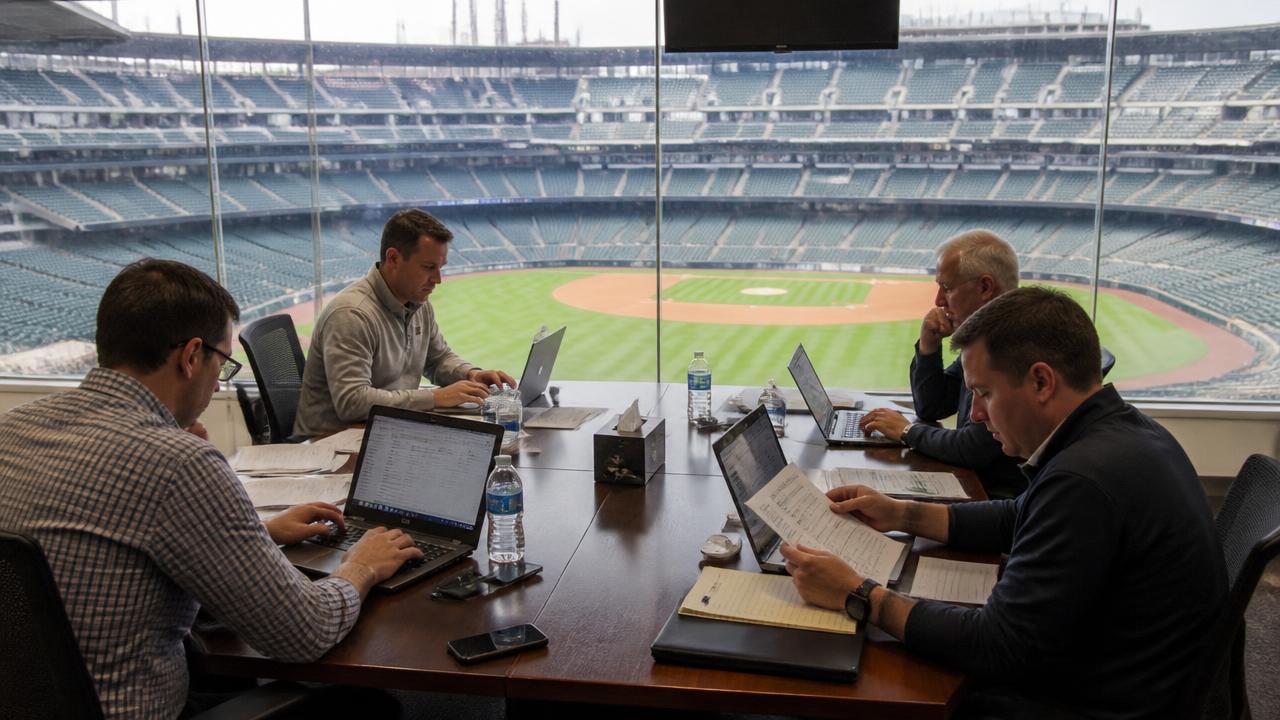
The decisions behind the decisions
By the time a season starts, the roster on the field is the product of years of prior decisions — draft picks, trades, development bets — that were made without any certainty about how they would age. A front office is effectively running a second, slower competition against every other front office, one that plays out over seasons rather than games.
That timescale is easy to forget when watching a single game, where the visible decisions belong to a manager choosing a pinch hitter. The larger and often more consequential decisions were made long before, by people the broadcast rarely mentions.
Trades and drafts as bets on value
Every trade is an exchange of a known present asset for an uncertain future one, or the reverse, and neither side can know for certain which one made the better bet until years later. The same is true of the draft, where a team is projecting a teenager's development against every other team's competing projection.
This uncertainty is why front offices are judged unfairly so often. A trade that looks lopsided in five years may have been the correct decision with the information available at the time, and a decision that looked shrewd in year one can look reckless by year four.
Judging outcomes we could not have predicted
The public conversation around front offices tends to grade on outcomes rather than reasoning, which is understandable but often unfair. A well-reasoned decision can fail because a player got injured or simply did not develop as projected, and a poorly-reasoned one can succeed by luck.
The more useful question, and the harder one to answer from outside, is whether the process behind a decision was sound given what was knowable at the time. That is a much less satisfying story to tell than a verdict, which is probably why it is told so rarely.