
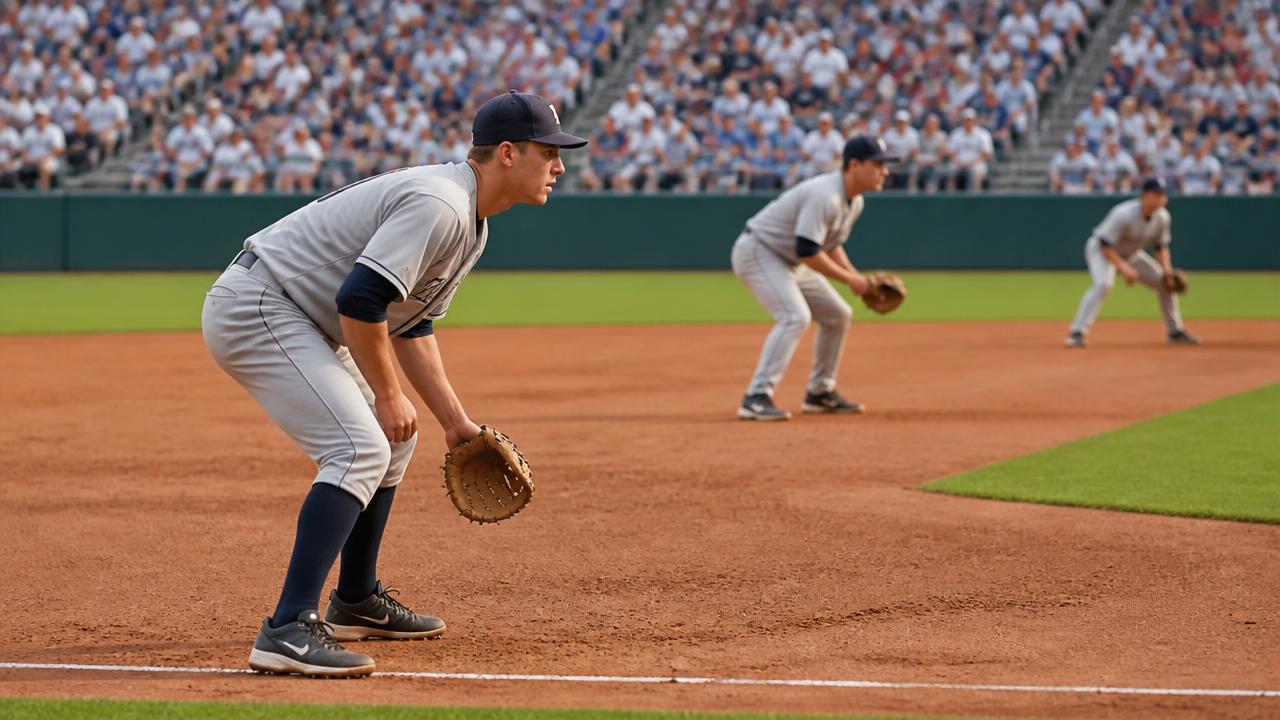
The defensive spectrum
Nine players take the field, and the positions are not equally hard. Shortstop, second base and centre field demand range, quick decisions and a strong arm. First base and the corner outfield spots are less demanding defensively, which is where teams put their best hitters who cannot handle anything harder.
That spectrum drives roster construction. A player who can field a difficult position adequately and hit reasonably well is more valuable than a better hitter limited to first base, because he lets the team put another bat somewhere else. Players tend to move down the spectrum as they age, never up.
Third base sits awkwardly in the middle: it needs reactions rather than range, because the ball arrives fast and close. Right field requires the strongest outfield arm, since the throw to third base is the longest an outfielder regularly makes.
The catcher
The catcher squats behind the plate for the whole game, receives every pitch, and is the only defender facing the rest of the field. He calls the sequence of pitches, controls the running game with his throwing, and absorbs physical punishment nobody else on the field experiences.
The subtlest part of the job is receiving: catching a borderline pitch in a way that presents it as a strike. It is a real, measurable skill worth a meaningful number of runs across a season, and it is invisible unless you are looking for it.
Because the defensive workload is so heavy, teams accept far less offence from catchers than from anyone else, and a catcher who hits well is treated as a franchise asset.
Pitching staffs and the designated hitter
The old split between a starter who pitches most of the game and a closer who finishes it has largely dissolved. Teams now plan around how many times a pitcher will face the same batters, because effectiveness drops sharply on the third time through a lineup. Starters are pulled earlier, and the bullpen covers a third of the game or more.
Relievers are used for matchups and leverage rather than by innings. The most important relief appearance is often in the seventh with runners on base, not the ninth with a three-run lead, and teams increasingly deploy their best arm at that moment instead of saving him.
The designated hitter, now used throughout the league, replaces the pitcher in the batting order. It ended a long-standing difference between the two leagues, removed a stream of automatic outs, and gave ageing sluggers a place to keep playing.