
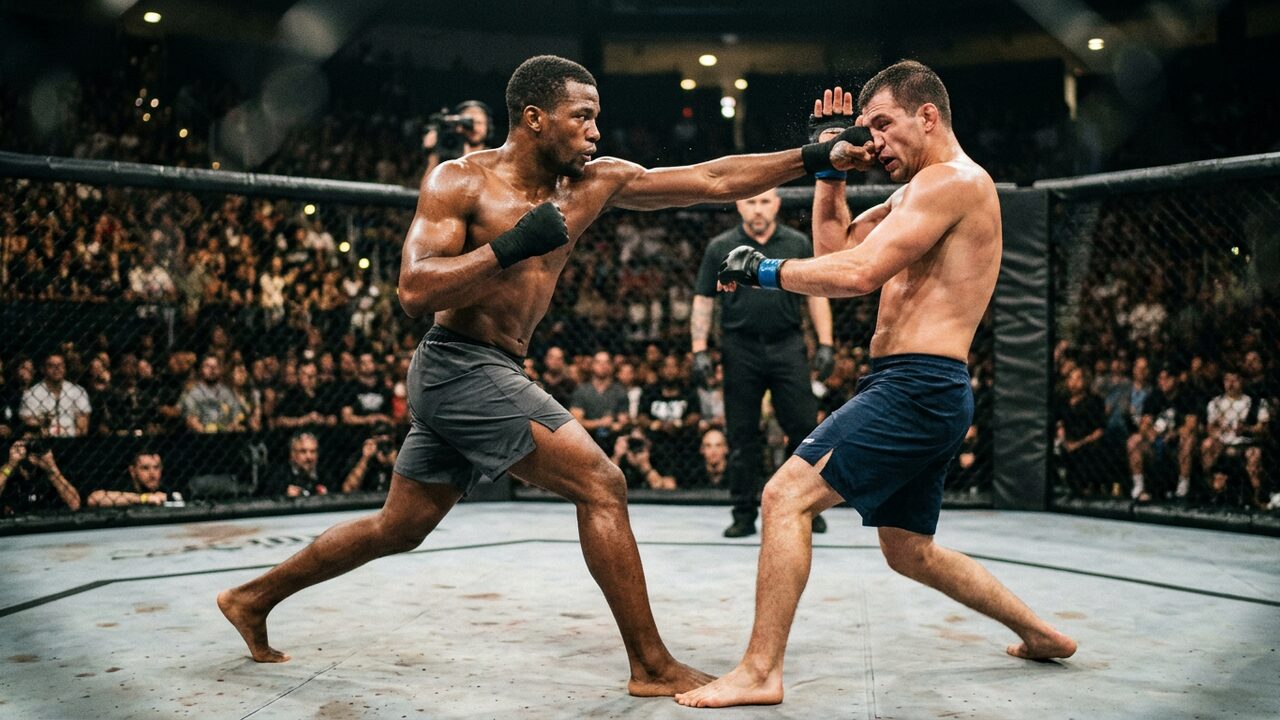
Same stance, opposite stance
Two orthodox fighters, or two southpaws, are in what is called a matched stance, where lead legs are on the same side and rear hands cross over the centre in a familiar way. An orthodox fighter against a southpaw is in an open stance, where lead legs are on opposite sides. That single difference changes which kicks and punches travel the shortest, least obstructed path to the target, and most fighters spend far less training time in open stance than in matched stance.
The fight for outside foot position
In an open stance matchup, whoever's lead foot ends up on the outside of their opponent's lead foot gains a clear angle for their rear hand and rear leg, while the fighter caught with their lead foot on the inside is more exposed to the same weapons. A significant portion of open-stance fighting is a quiet, ongoing struggle over this foot position, often more consequential than any single strike thrown during it.
Why the mismatch feels unfair
Because southpaws are a minority of fighters, orthodox competitors accumulate less experience training against the stance than southpaws accumulate training against orthodox opponents, who are the majority. This asymmetry in reps, not any inherent stance advantage, explains much of why southpaws have historically performed well against orthodox opposition, and it is a gap that closes as more gyms deliberately drill open-stance sparring.