
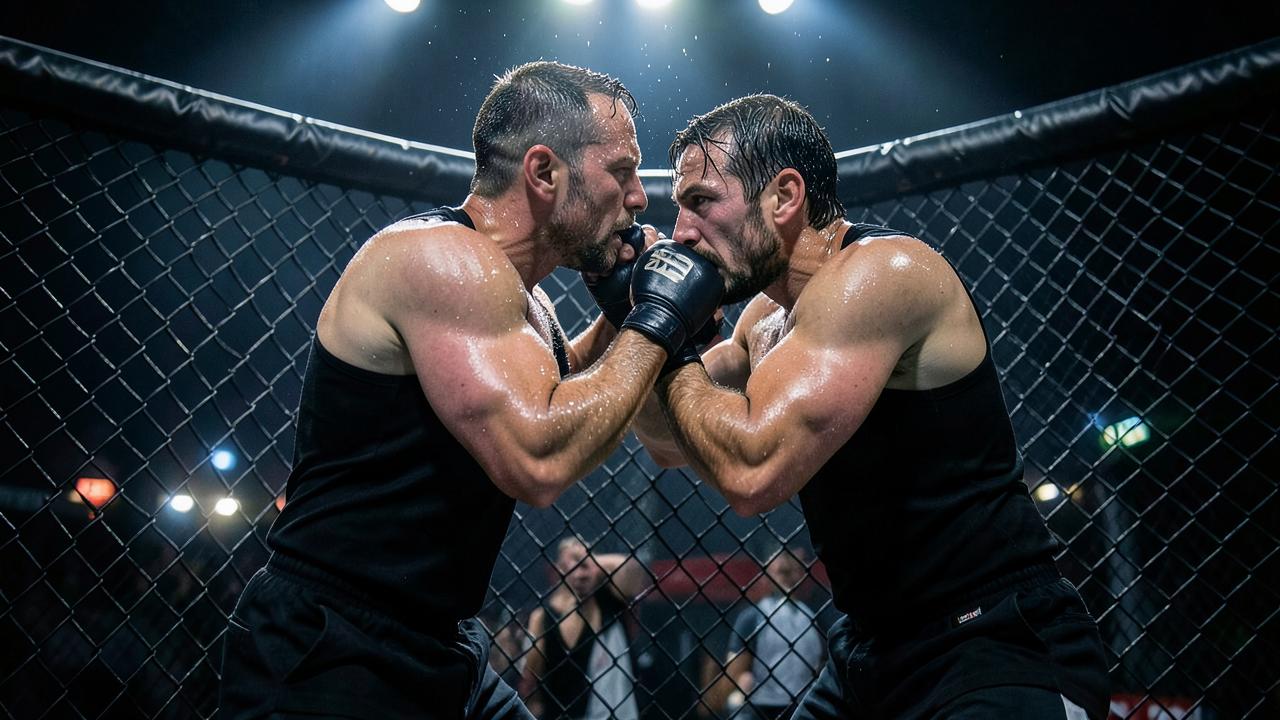
A range of its own
Commentary often treats the clinch as a brief interruption between striking and the ground, but skilled clinch fighters treat it as a full range with its own vocabulary: collar ties, underhooks, overhooks and wrist control, each of which sets up different strikes or takedown attempts. A fighter comfortable in the clinch can choose to stay there, strike there, or use it as a launching point, rather than treating it as somewhere to escape from as quickly as possible.
The underhook battle
Whoever secures the underhook, an arm threaded beneath the opponent's armpit, gains leverage to control posture and attempt takedowns or turns against the cage. The fighter left with only an overhook, gripping over the top of the arm, is at a structural disadvantage and typically has to fight simply to neutralise the position rather than to attack from it, which is why so much clinch exchange is a quiet fight for that single grip.
Short weapons for short distance
At clinch range, knees to the body or head and short elbows are far more efficient than punches, which need distance to generate power. Fighters who train the clinch specifically learn to land these strikes while maintaining the grip that keeps them safe from a counter-takedown, which is a different skill from either pure striking or pure wrestling and is often the least trained of the three.