
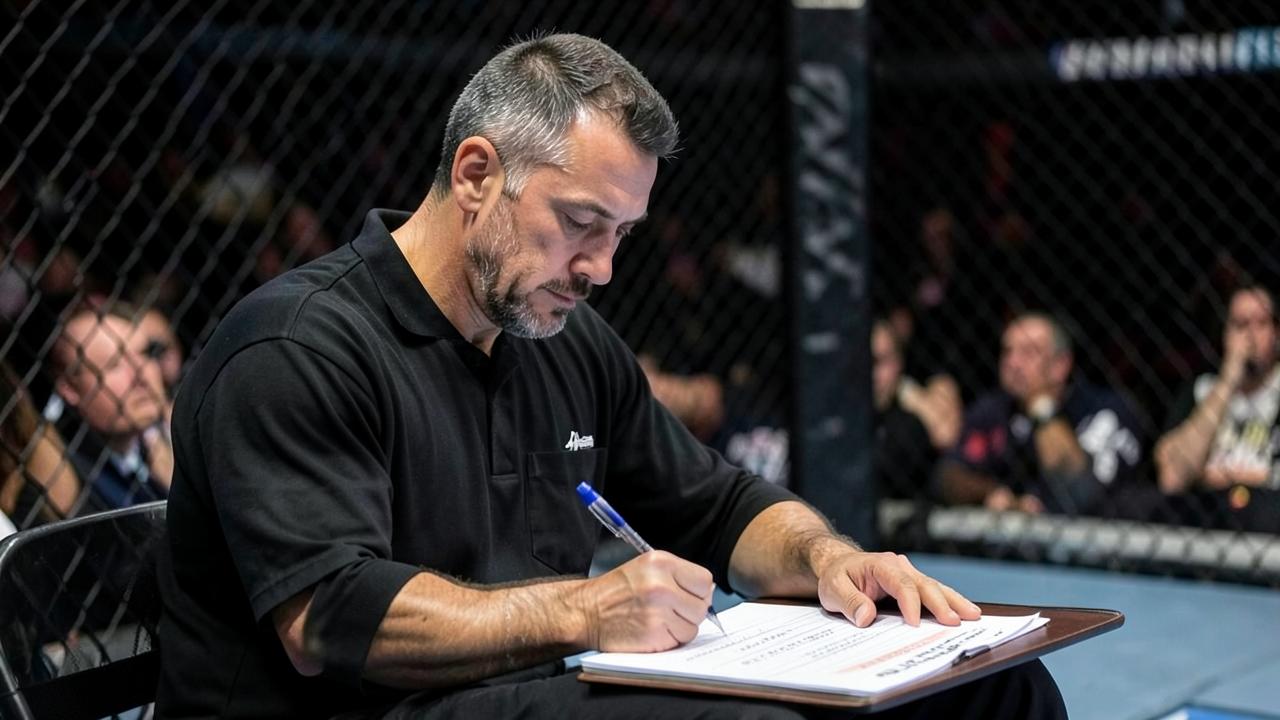
A ranked list, not a scoreboard
Judges are instructed to look first at effective striking and effective grappling, and only move to the lower-ranked criteria of aggression and control of the fighting area if the fight is essentially even on the first two. In practice this means a fighter who lands the cleaner, more damaging strikes should win the round even against an opponent who pressed forward more, because aggression is a tiebreaker, not a primary criterion.
Effective, not merely landed
The word effective is doing real work. A high volume of blocked or glancing strikes counts for less than fewer strikes that visibly affect an opponent, and a takedown that goes nowhere counts for less than one that leads to sustained top position. Judges are meant to weigh impact and consequence, not simply tally attempts, which is why fight statistics on a broadcast graphic often disagree with how a round is actually scored.
Where control fits in
Control of the fighting area, sometimes called octagon control, is separate from grappling control on the ground; it covers who is dictating range and position on the feet as well. Both forms of control sit below striking and grappling in the priority order, which is precisely why a fighter who spends a round pressuring forward without landing much can still lose it clearly to counter-striking from range.