
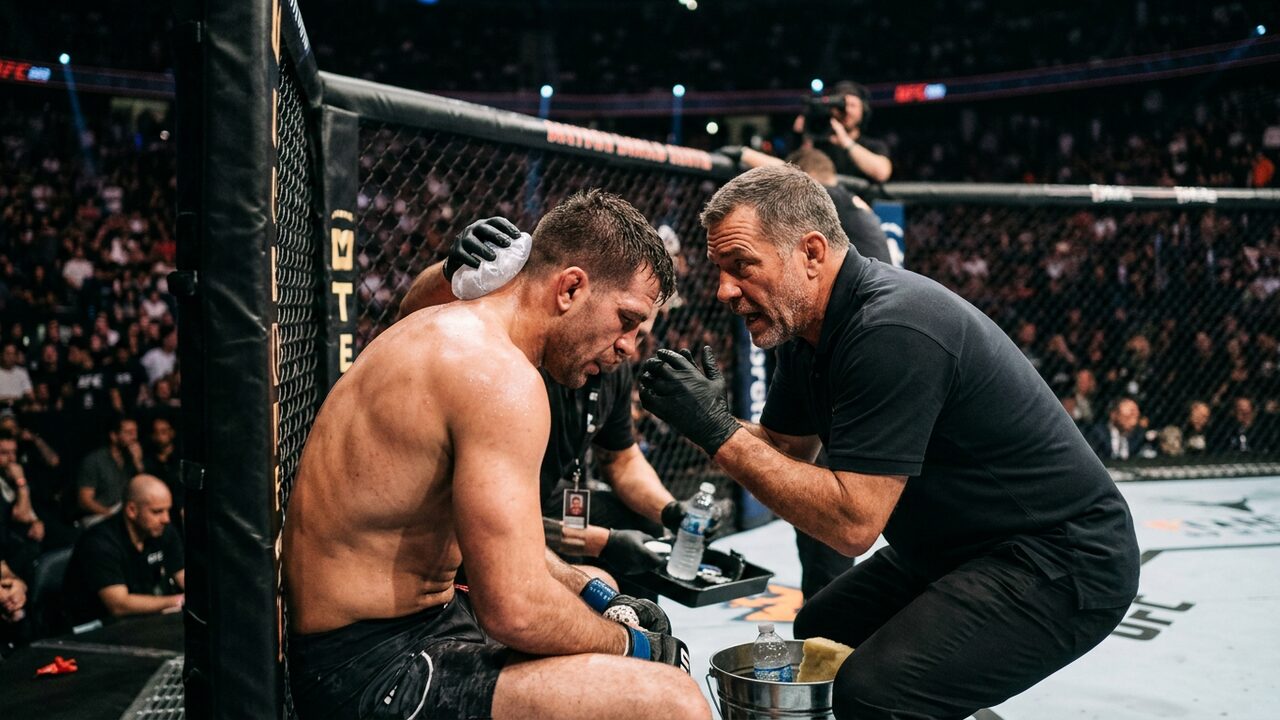
The limits of sixty seconds
Between rounds, a fighter is physically fatigued, adrenalised and only partly able to process new information, so a corner that tries to deliver five separate corrections usually achieves none of them. Effective cornering means arriving at the stool already having decided, during the round itself, what the single most important adjustment is, rather than compiling a list of everything that went slightly wrong.
Prioritising the one fix
A skilled coach watches for the pattern that is costing the round the most, whether that is a dropped hand inviting a counter or an opponent's leg kicks going unchecked, and communicates only that, often in a single short sentence repeated for clarity. Fighters retain simple, specific instructions such as 'check the leg kick' far more reliably under fatigue than compound instructions layering several changes at once.
Tone is part of the instruction
How something is said matters almost as much as what is said. A corner that sounds panicked tends to transmit that panic to a fighter who is already exhausted and uncertain, while a calm, confident tone can steady a fighter even when delivering difficult news about being behind on the cards. This is one reason experienced cornermen are valued for temperament and communication as much as for tactical knowledge.