
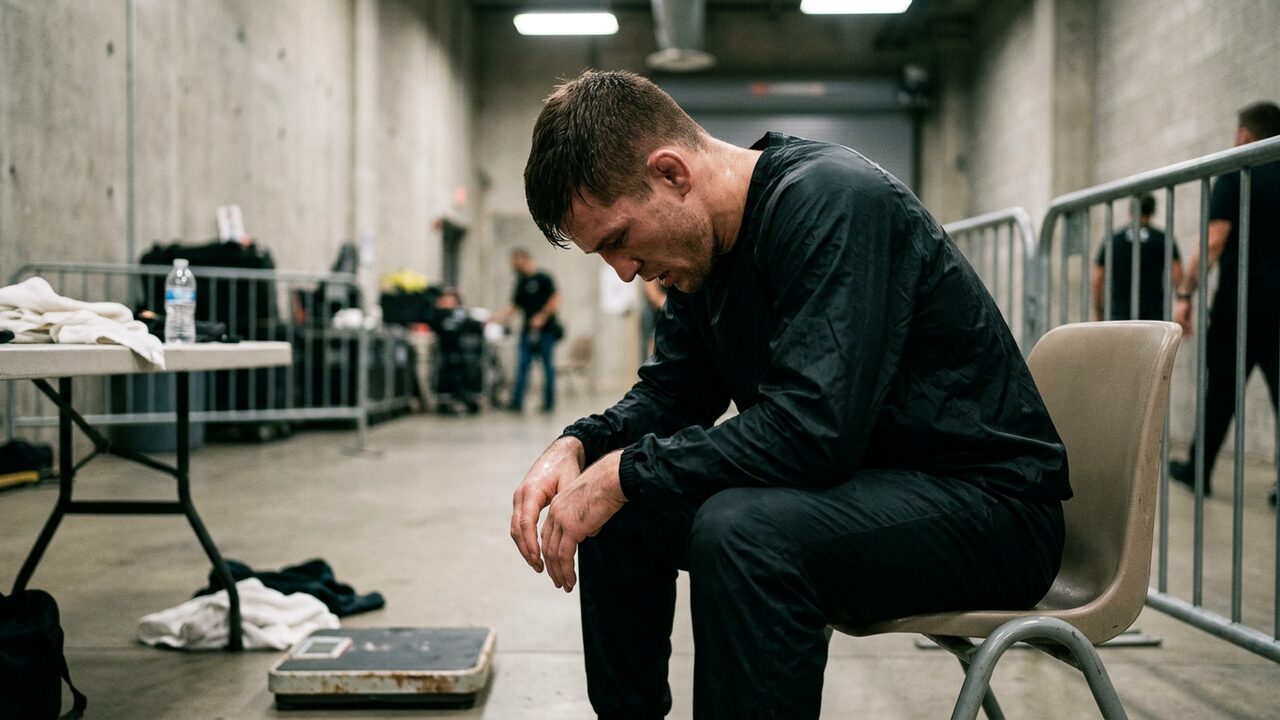
The gap the rule creates
Weigh-ins typically happen a day or more before a fight, which means a fighter only has to be at the contracted weight at that single moment, not on fight night. Cutting large amounts of water in the final days lets a fighter compete in a weight class below where their normal body mass would otherwise place them, then rehydrate afterwards to return closer to their natural size. The rule was written around a moment in time, and the cut is simply the exploitation of that window.
What the body pays
Severe dehydration reduces blood plasma volume, impairs the body's ability to regulate temperature, and can slow reaction time and recovery between rounds if rehydration is incomplete or rushed. A fighter who cuts too aggressively risks arriving at the cage strong on paper but compromised in the areas that actually matter under fatigue, which is why experienced camps treat the cut as a skill with real failure modes rather than a formality.
Attempts to close the gap
Same-day weigh-ins, additional hydration testing and stricter early-weigh-in checks are all attempts to narrow the advantage without banning the practice outright, since a total ban would be difficult to enforce. None of these measures eliminates cutting, but each one raises the cost of cutting too far, which is the more realistic goal given how embedded the practice has become in fight preparation.