
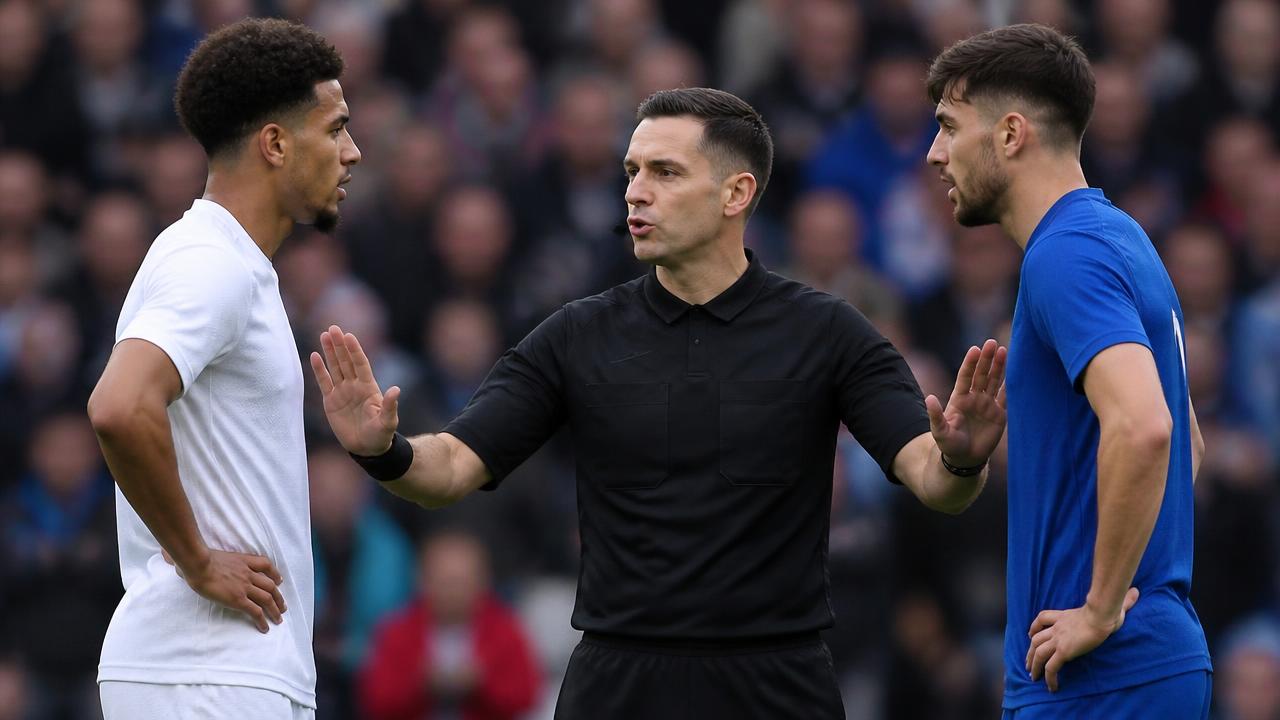
Decisions are the visible part of a bigger job
Television coverage tends to isolate refereeing to its most dramatic moments: a penalty award, a red card, a disallowed goal. Those moments matter, but they are a small fraction of what a referee actually does across ninety minutes, most of which involves quieter management of a contest that could tip into chaos if left unattended. A word to a captain, a warning delivered early rather than a card produced late, and a consistent standard for what will and will not be allowed all shape a match long before any single controversial incident arrives.
Referees who are well regarded by players tend to share a habit of explaining themselves in the moment rather than issuing a decision and moving on. A short sentence to an aggrieved player, even one that simply confirms what was seen, defuses far more tension than silence does, because most frustration in football comes from feeling unheard rather than from the decision itself.
Consistency as the real currency
Players and coaches rarely demand perfection from officials; they demand a standard that holds from the first minute to the last. A foul given in the opening exchanges but waved away for a near-identical challenge late on creates more resentment than a single wrong call in isolation, because it suggests the framework itself has shifted rather than that a mistake was made. This is part of why the reputation of a referee is built over years rather than single performances: consistency is only visible across repeated viewings.
It also explains why some of the most technically correct performances are remembered poorly. A referee can get the letter of the law right on every individual call and still lose control of a match if the pattern of decisions feels arbitrary to the players living through it, because football is played by people responding to a perceived standard, not a rulebook read in isolation.
Invisibility as the goal
The old cliché that a good referee is one nobody talks about after the game contains real truth, though it undersells the skill involved in achieving it. Being unnoticed requires anticipating flashpoints before they occur, positioning correctly to see incidents without needing a second look, and making calls promptly enough that the game's rhythm is barely interrupted. None of that shows up as a single moment worth replaying, which is exactly why it is undervalued.
The pressure of technology has changed some of this without removing it. Video review has made certain decisions more accurate, but it has not replaced the in-game management that prevents most incidents from needing review at all, and the referees still most respected by players are the ones who rarely need the system to bail them out.