
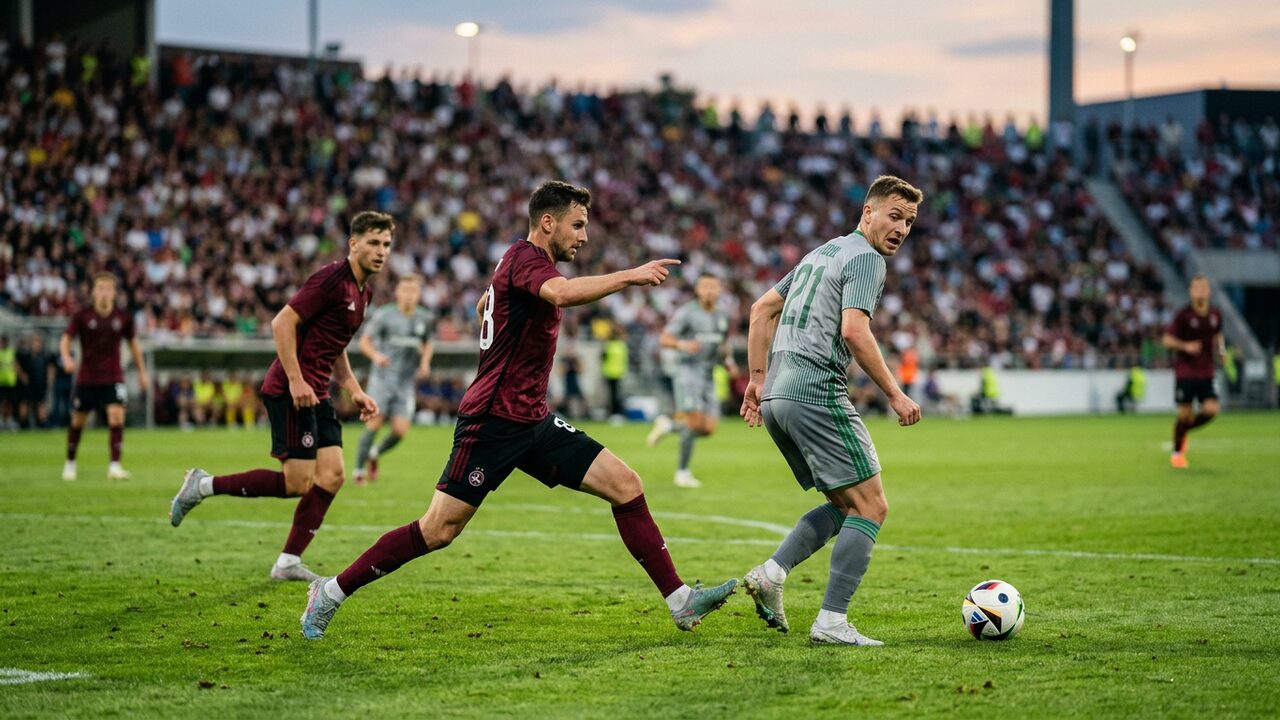
Effort is not the mechanism
Commentary often treats pressing as a question of energy, as if a team presses well because its players are simply willing to run further than the opposition. That framing misses the actual mechanism. A press only works if every player moves at the same moment, closing passing lanes as a unit rather than chasing the ball individually. Without a shared trigger, one player presses while three others hold their position, and the ball simply goes around the presser. The energy is real, but energy spent without coordination just tires a team out for no defensive gain, which is why exhausted-looking sides can still be well organised out of possession.
What actually starts the press
Coaches drill specific cues: a pass played backwards, a heavy touch, the ball reaching a full-back near the touchline where the pitch narrows the passing options. These moments are chosen because they briefly reduce the number of safe passes available to the man on the ball, and a coordinated press exploits that narrow window rather than trying to create pressure from nothing. Once the trigger fires, nearby players cut passing lanes rather than sprinting at the ball directly, forcing a rushed pass that the rest of the team has already anticipated and is positioned to intercept.
The cost of getting it wrong
A mistimed press is expensive because it inverts the geometry that made pressing attractive in the first place. Players who have committed forward leave space behind them, and if the trigger does not lead to a turnover, the opposition can play through the vacated area with numbers in their favour. This is why teams that press well also defend calmly when the press fails: they treat a missed trigger as information, not disaster, and reset into their base shape rather than chasing the game individually across the pitch.