
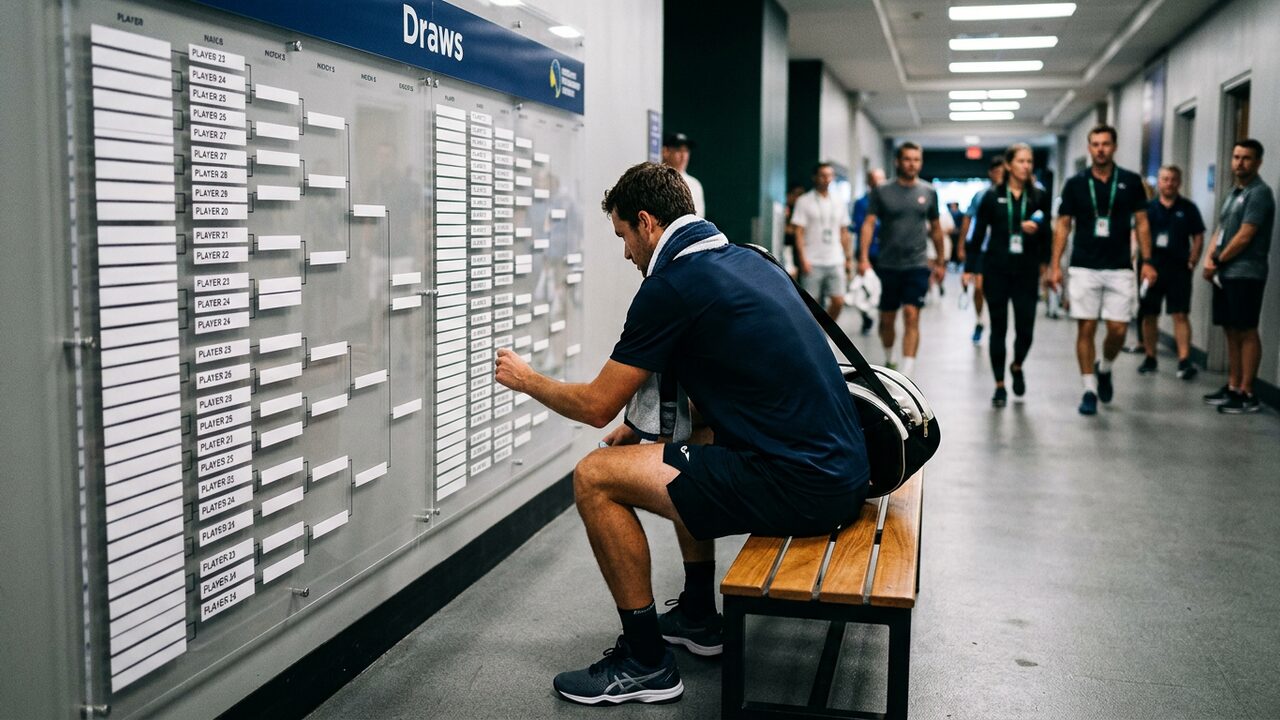
What seeding is actually designed to do
Seeding exists to stop the strongest players meeting in the first round, nothing more ambitious than that. The top seeds are placed in separate quarters, or eighths in a large draw, so that in theory the best players only collide once the tournament has thinned itself out. That is a narrow guarantee. It says nothing about the difficulty of the players sitting between a seed and that eventual meeting, and it says nothing at all about the many players in the draw who are not seeded but are dangerous anyway.
The unseeded floater problem
Every draw contains strong players without a seed, sometimes because of a recent slump, sometimes because they are returning from injury or simply young and rising. These floaters are placed by lot, and where they land can make one quarter of the draw considerably harder than another that looks identical on paper. A seed can therefore have an objectively tougher route than a lower seed several places above them, and pre-tournament previews that only mention seed numbers routinely miss this.
Why a kind draw is not a promise
None of this means a soft-looking draw guarantees anything. Results upstream reshape everything downstream: a dangerous seed can be eliminated early, handing a gift to whoever meets that section next, or an unheralded floater can win three rounds and become the hardest match in the tournament by the second week. The draw is best read as a starting probability, not a fixed script, and the most useful habit is to revisit it after each round rather than judging it once and moving on.