
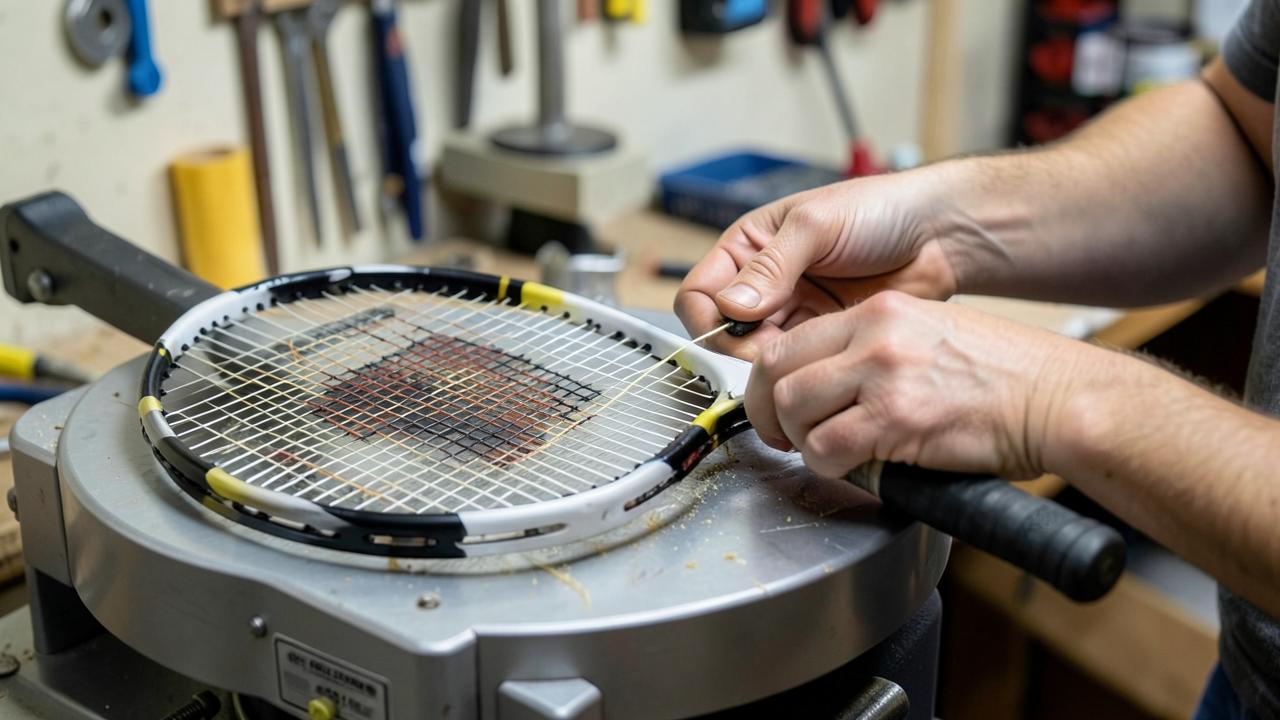
The trampoline effect
Strings under lower tension deform more on contact and spring back more energetically, storing and returning more of the ball's energy in a way often compared to a trampoline. This adds free power to a shot without requiring extra swing speed from the player, which is useful for anyone whose technique already generates plenty of spin and pace control but wants more raw depth without changing their swing.
What tighter strings buy instead
Raising tension reduces that trampoline effect, giving the player less free power but a flatter, more predictable response across the string bed, which many players describe as greater control. The ball comes off the racket more consistently regardless of exactly where on the strings it is struck, which matters most to players whose swing already produces plenty of pace and who are looking to place the ball precisely rather than add depth.
Why players change it match to match
Because temperature and altitude both affect how a ball behaves, many players adjust string tension for specific conditions rather than using a single setting all year, stringing tighter in hot, high-altitude air where the ball already flies faster and looser in cold, heavy conditions where extra help is welcome. This kind of fine-tuning rarely gets noticed by viewers, but it is one of the few adjustments a player can make to a familiar racket without altering technique at all.