
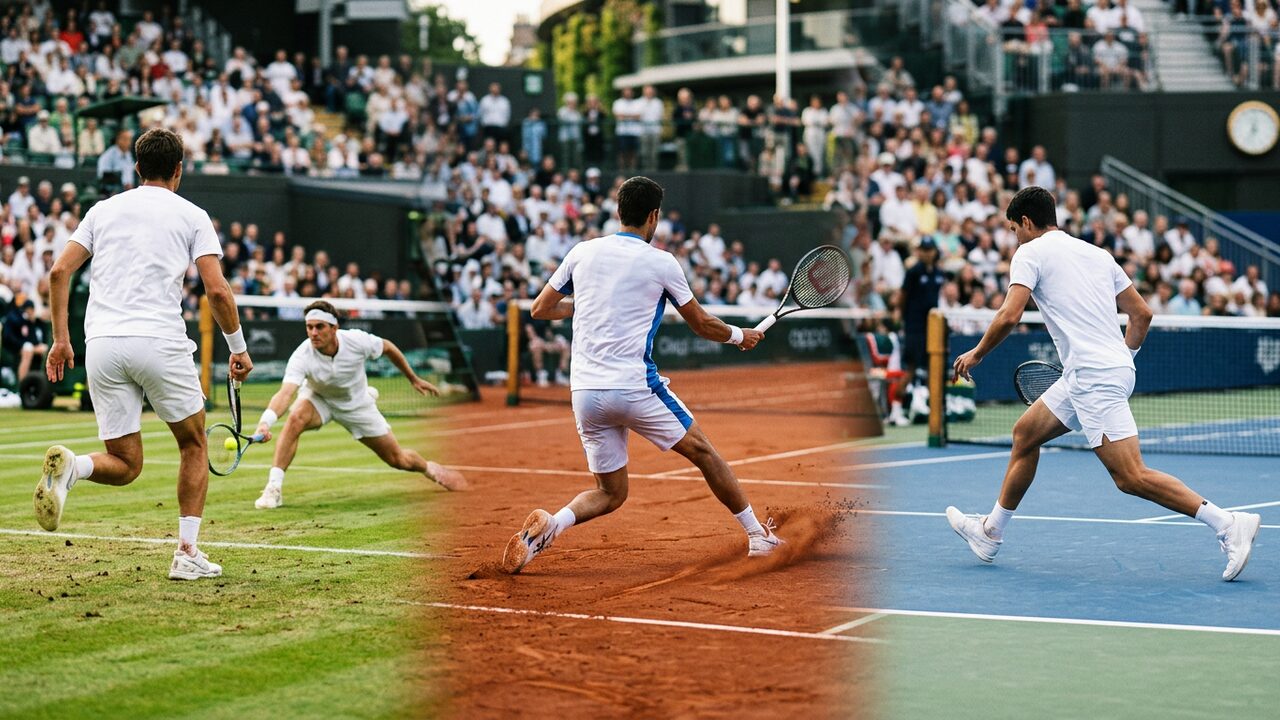
Clay: friction as an ally
Loose clay grains bite into the ball on impact, converting more of its speed into spin and less into forward pace. The practical effect is a slower, higher-bouncing shot that gives a defending player extra time to reach it and extra height at which to strike it back. This is why heavy topspin and long rallies are native to clay rather than a stylistic accident: the surface itself is rewarding the shape of shot that best exploits its own friction, and players who generate topspin naturally find the ball sitting up invitingly rather than skidding through low.
Grass: low, fast, unforgiving
Grass offers the opposite trade. Its surface is slicker and the blades compress rather than grip, so the ball skids and stays low instead of climbing after the bounce. Reaction time shrinks and the reward shifts toward players who can take the ball early, before it has time to sit up, and who serve with enough pace to end points quickly. Grass punishes hesitation more than any other surface, because there is often no second window in which to adjust a stroke once the first read is wrong.
Hard courts: the middle ground
Hard courts are manufactured rather than grown, and their behaviour depends heavily on the exact mix used, but broadly they sit between clay and grass in both bounce height and pace. That middle position is precisely why hard courts are the most common surface in the sport: they do not demand the specialised patience of clay or the specialised timing of grass, so a wider range of playing styles can be competitive on them without radical adaptation, which also makes them the fairest general test of all-round ability.