
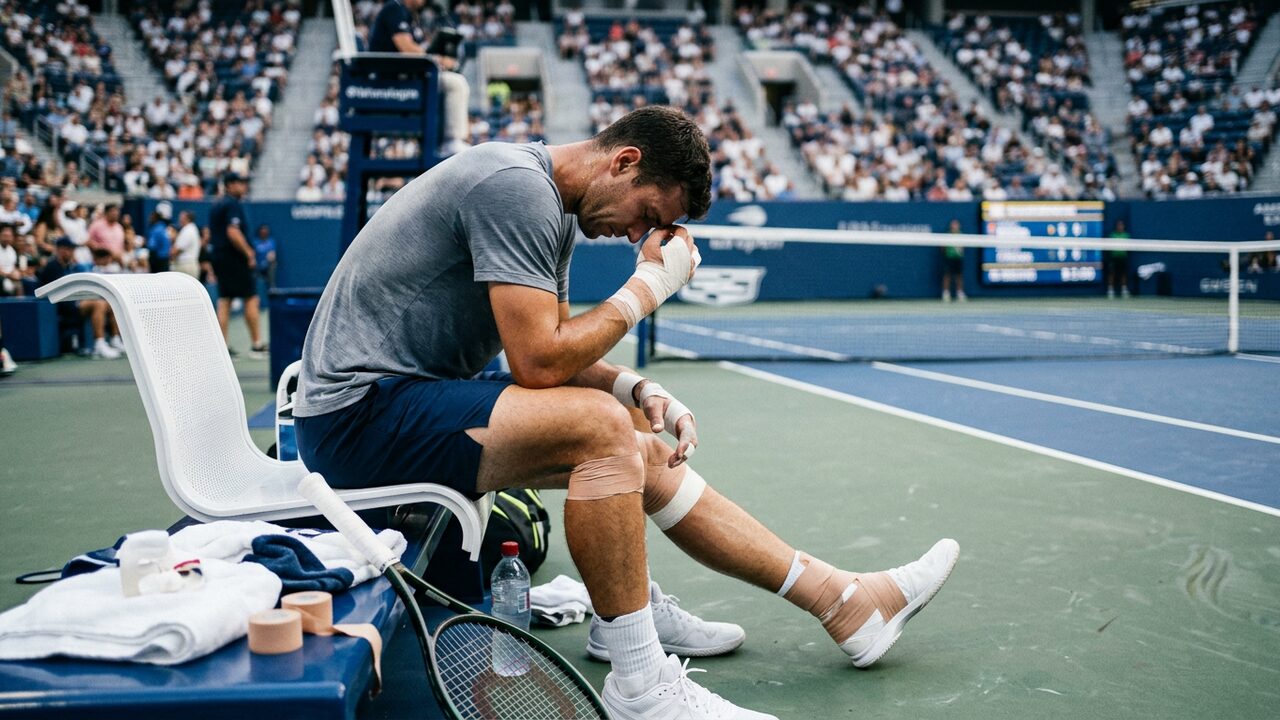
A season with almost no off-season
The professional tennis calendar runs for close to eleven months, leaving a genuinely short window for the kind of extended physical rebuilding that other sports build into a true off-season. Because ranking points are earned individually at each tournament rather than distributed by a fixed league season, there is also a persistent incentive to keep entering events, since skipping one can only lose points rather than preserve them, which pulls against the very rest that a long season makes necessary.
Surfaces demand different bodies
Layered on top of the calendar's length is its variety: a player can move from a clay tournament that rewards sliding and long points straight into a grass event that demands short, explosive movement and low return of serve, sometimes within the same fortnight. Each transition requires the body to adapt its movement patterns quickly, and that rapid readaptation is widely considered a significant contributor to injury, particularly to joints and tendons that have just been loaded in one specific way and are suddenly asked to work in another.
Why players now pick and choose
These pressures are the main reason leading players increasingly treat their calendars as something to be actively managed rather than fully played, skipping events that carry lower ranking rewards relative to their physical cost. This is a rational response to a schedule that offers little structural relief, and it explains why absences from mid-tier tournaments are now common among top players even when nothing is publicly wrong, since the real trade-off is happening across a season rather than in any single week.