
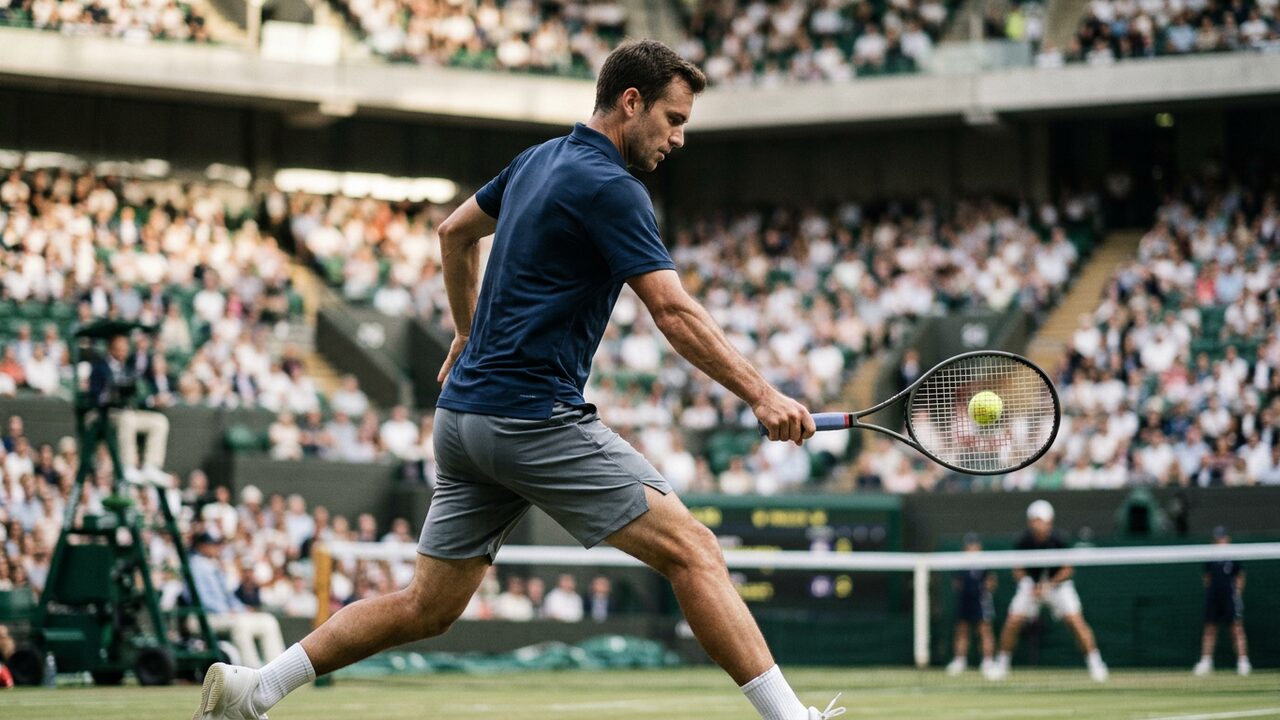
Why two hands became the default
Adding a second hand to the grip gives a backhand more stability against pace and, crucially, more leverage against a ball that has bounced high, which is a common situation against heavy topspin. That stability is why the two-handed backhand became the standard choice for most players learning the game from childhood: it forgives timing errors more readily and copes better with the high, kicking shots that heavy topspin produces on slower surfaces, which is most of the modern tour.
What one hand still offers
The one-handed version trades some of that stability for extra reach, since a single extended arm covers more court than two hands gripping close together, and for a more natural transition into the slice backhand and the volley, both of which use a similar single-handed motion. Players with a one-handed backhand often have a more varied backhand repertoire as a result, able to slice, drive or approach the net from what is essentially the same base position.
A choice made early, rarely revisited
In practice, the decision between one hand and two is made while a player is still developing basic technique, and switching later is rare because so much else in a player's game, from grip changes to footwork patterns, is built around whichever backhand they started with. This is why the one-handed backhand's decline in numbers is often described as generational rather than as any player-by-player rejection of the stroke's genuine merits.