
Two different questions being asked
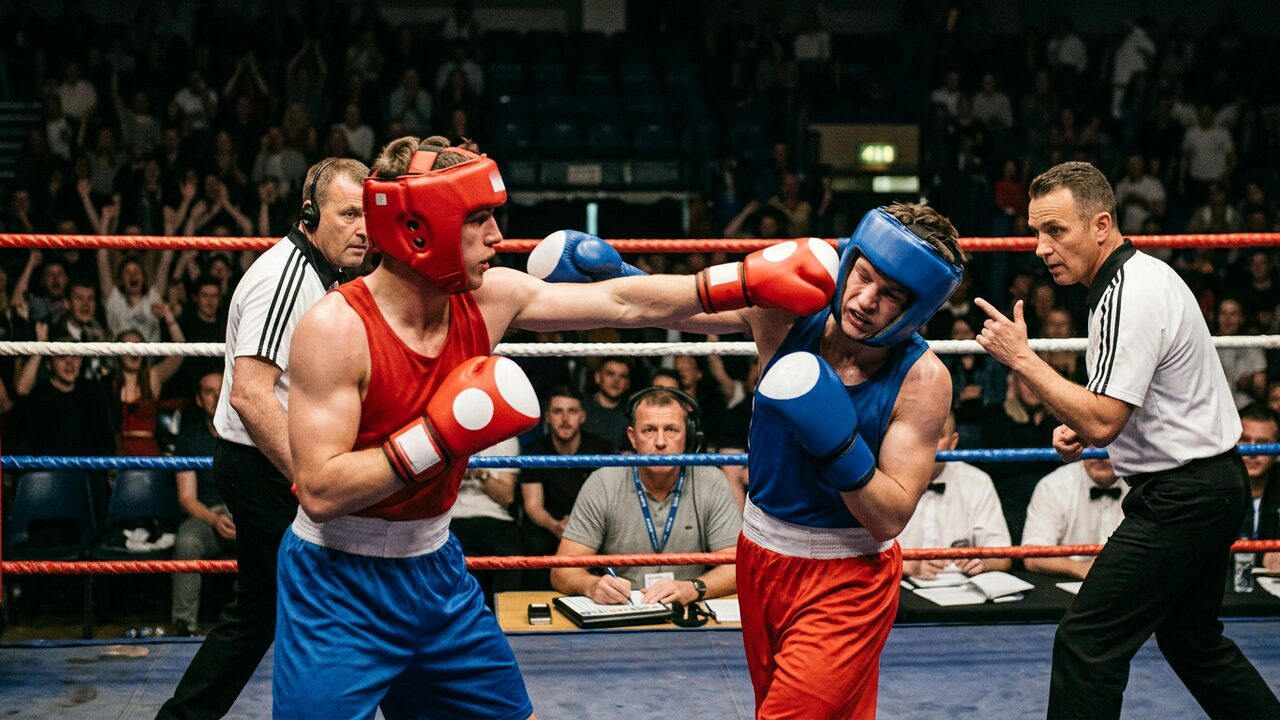
Professional judges are broadly asking who won each round through a mix of clean punching, effective aggression and control, while amateur scoring under modern systems focuses more narrowly on counting clearly landed, properly weighted scoring shots. The amateur code is trying to answer a more mechanical question, which produces cleaner, faster, more high-volume exchanges rather than the sustained ring generalship professional judging can reward.
Why short bouts change the incentives
Amateur contests are typically far shorter than a professional twelve-round fight, which removes much of the pacing calculation described elsewhere in this collection: there is little value in conserving energy for a distance that will not be reached. This favours fighters who can produce high, sustained output over a brief period, sometimes at the expense of the patience and setup work valued in the pro game.
The adjustment problem
Fighters moving from the amateur to the professional ranks often have to relearn pacing, power development and how much risk to take in pursuit of visible scoring shots, since habits built for a short, volume-scored contest can be liabilities across twelve rounds against opponents who punch harder. This adjustment period is a well-recognised part of a fighter's early professional development.