
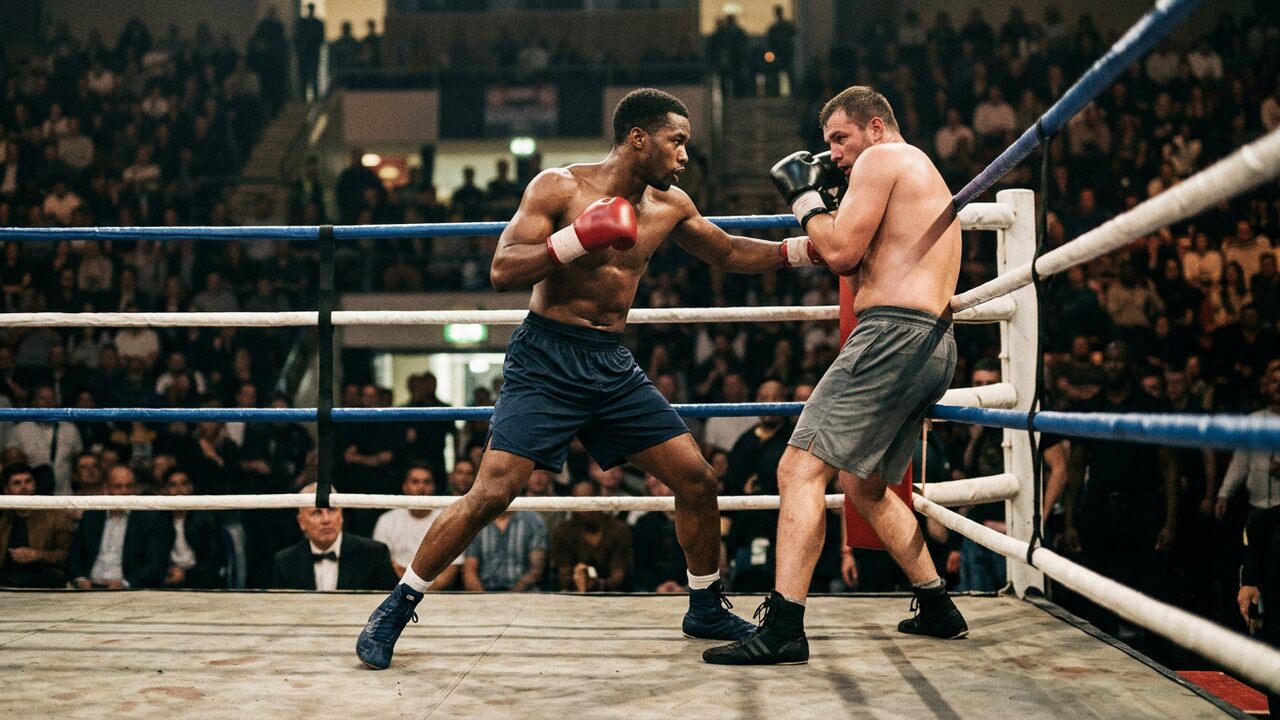
A finite square, not an open field
Because the ring does not expand, every step a fighter takes changes the amount of space left behind them, and eventually the ropes remove the option of further retreat altogether. Fighters who move only backward in straight lines are spending down a finite resource with no way to replenish it, which is why habitual straight-line retreat tends to end badly against a patient opponent who simply keeps walking forward and waits for the ropes to arrive.
Angles change the fight, not just the position
Stepping laterally rather than backward does two things at once: it preserves distance and it forces an opponent to reset their aim, because a punch aimed at where a target was a half-second earlier now misses. Fighters who pivot off the front or back foot at the right moment can turn a defensive movement into an offensive one, since the opponent's new position after being forced to turn is often less defensively sound than the one they left.
Cutting off the ring deliberately
Pressure fighters who succeed rarely just chase; they cut angles to herd an opponent toward a corner or the ropes, reducing the space available on each exchange rather than closing distance directly. This is a footwork skill built on anticipating where an opponent wants to go and arriving there first, and it is one reason a slower fighter with excellent positional sense can consistently outmanoeuvre a technically faster one who moves without a plan.