A mismatch in mirror
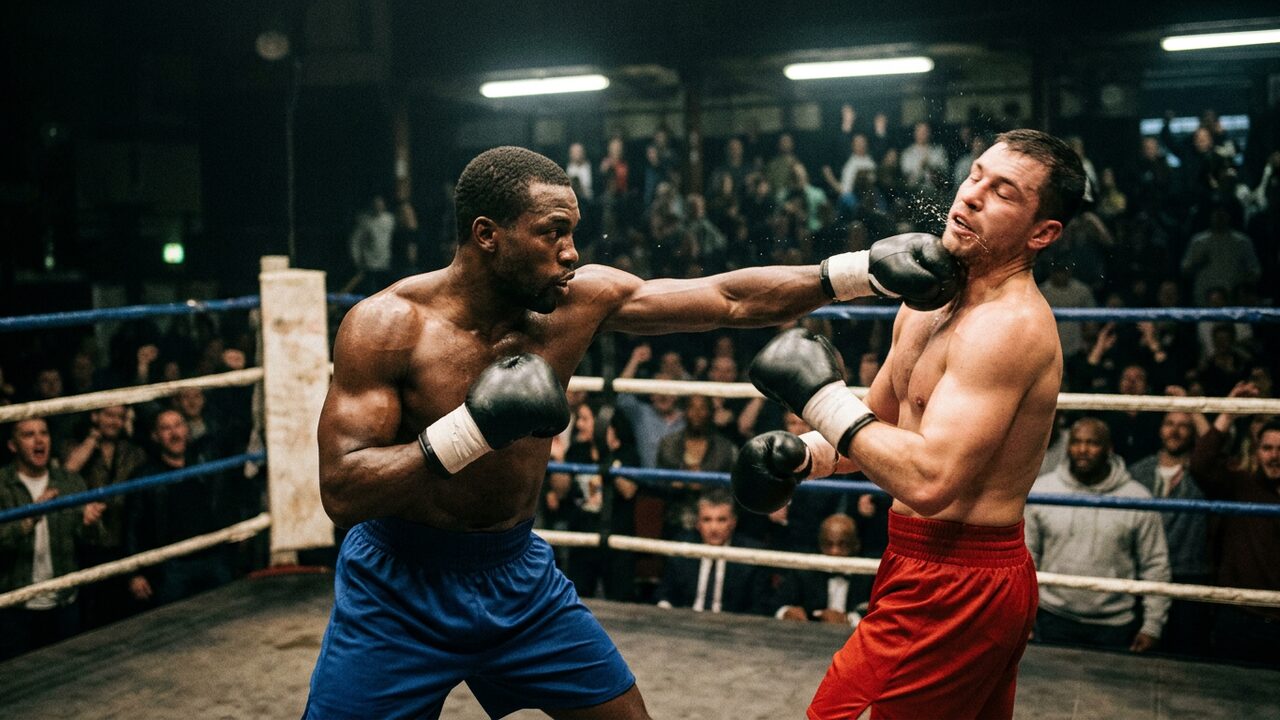
Most fighters are orthodox, leading with the left hand and foot, so most sparring and most professional experience is built around facing that same configuration. A southpaw stance flips this entirely, and an orthodox fighter who has spent years calibrating their reactions against a left lead suddenly faces a right lead, which means many of their trained reflexes point in the wrong direction at the start of a southpaw fight.
The lead foot problem
In an orthodox-versus-southpaw fight, whoever gets their lead foot outside their opponent's lead foot generally gains a significant angle advantage, since it opens a clear line to the body and head while making the opponent's own power hand harder to land safely. This foot positioning battle happens constantly and often unconsciously, and fighters with good southpaw experience are specifically trained to win it.
Crossed power lines
Because a southpaw's rear hand is the right rather than the left, their power shots travel along a different line than an orthodox fighter is used to defending, often finding gaps in a guard shaped by years of facing the opposite configuration. This is the concrete, mechanical reason southpaws are often described as awkward: the difficulty is not mysterious but a direct consequence of geometry that most fighters have simply had less practice defending.