
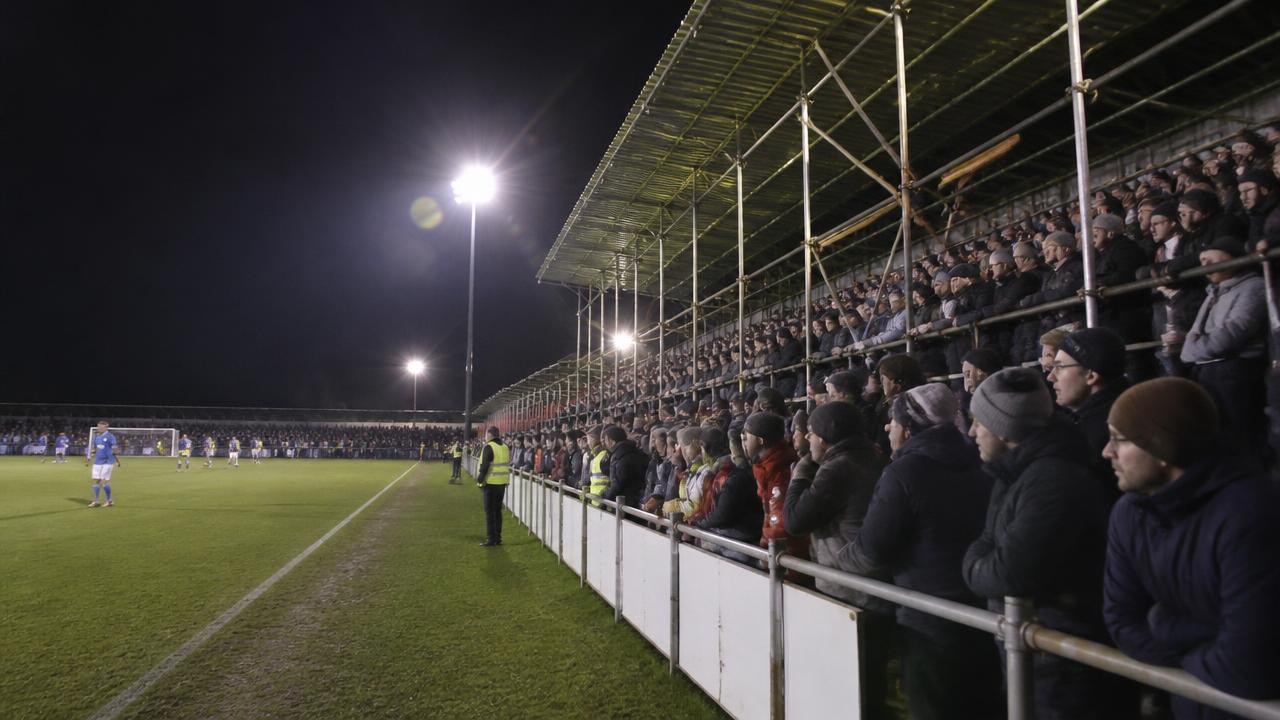
Building a stadium for one night
When a small club draws a major opponent, the work starts months before kickoff. Temporary stands are hired, floodlights and safety certification are checked against requirements written for larger venues, stewarding is scaled to a crowd several times the usual size, and a ticketing operation is invented from nothing by people who normally sell entry at a gate. Most of that is done by volunteers who take leave from their jobs.
The football side is almost the simplest part. A squad of semi-professionals trains as usual, plays its league fixtures, and prepares for one match against opponents it has only watched on television.
Money that outlasts the tie
Financially, a single cup night can dwarf a small club's annual income. Gate receipts from a full temporary stadium, a share of broadcast money and the commercial attention around the fixture can fund a new pitch, a clubhouse or a youth programme, and clubs that spend it on infrastructure rather than on wages are still benefiting a decade later.
The ones that spend it on a promotion push, and then face the same costs the following year without the windfall, provide the cautionary version of the same story.
What people remember
The result usually goes the expected way. What remains is everything around it: the queue that stretched down a village road, the reserve defender who marked an international for an hour, the photograph in the clubhouse, the children who now support a club because of one evening. Those things do not appear in any competition record and they are why cup football is defended so fiercely whenever a reform is proposed.
It is the one part of the calendar where the gap between the top and the bottom of the sport is bridged in person rather than in principle.