
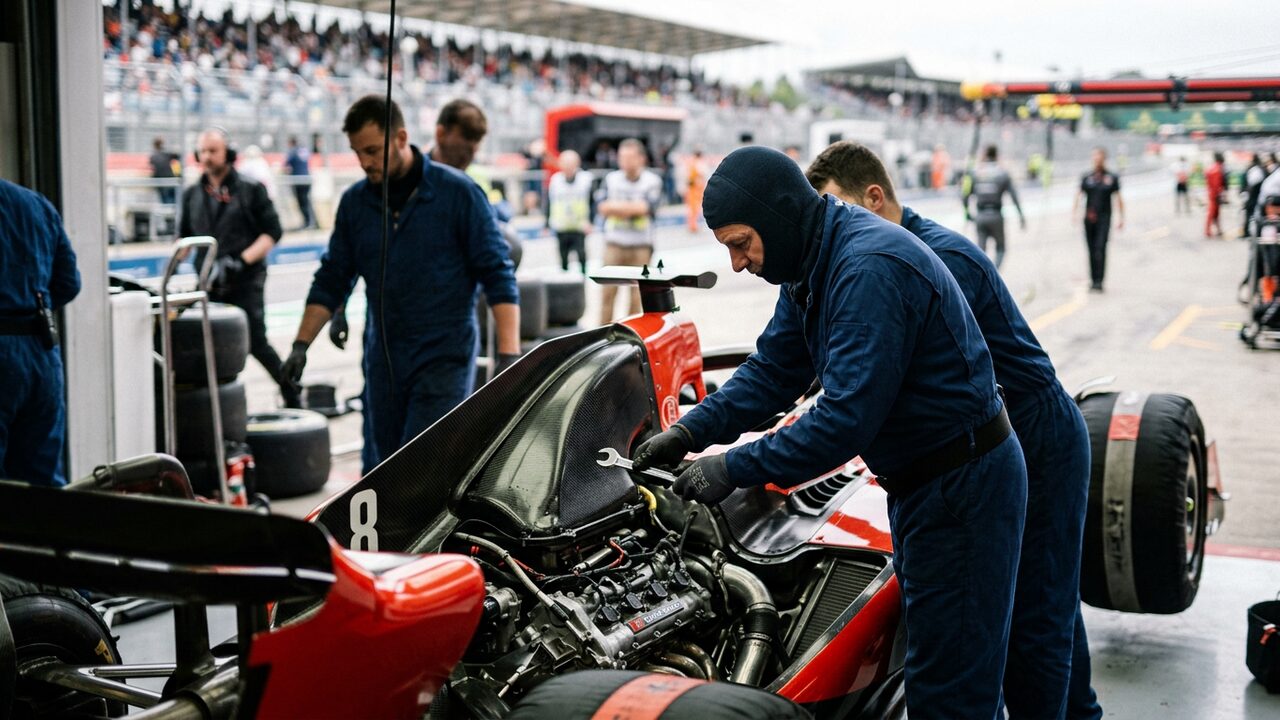
Why engine rules move slowly
Designing and homologating a new power unit is vastly more expensive and time-consuming than adjusting bodywork, so engine regulations are typically locked in for long, multi-year cycles rather than revised annually the way aerodynamic rules often are. This gives manufacturers a long runway to prepare but also means a wrong interpretation of the new rules early on is much harder to correct mid-cycle than an aerodynamic misstep would be.
Early advantage tends to compound
Because development within a fixed engine formula is constrained and gradual, a manufacturer that reads the new rules correctly at the outset often keeps an advantage for several seasons, since rivals cannot simply redesign the fundamentals mid-cycle. This is why a new engine era can look competitively lopsided for an extended period even as chassis and aerodynamic development elsewhere continues at its usual pace.
What resets the balance
The balance genuinely shifts only when the next regulation cycle begins, giving every manufacturer a fresh set of assumptions to test at the same time, which is why the sport pays close attention to how engine rules are drafted years in advance. Understanding which era a season sits within, early, established or approaching a reset, is one of the more reliable ways to interpret why certain manufacturers appear dominant for a stretch of years.