
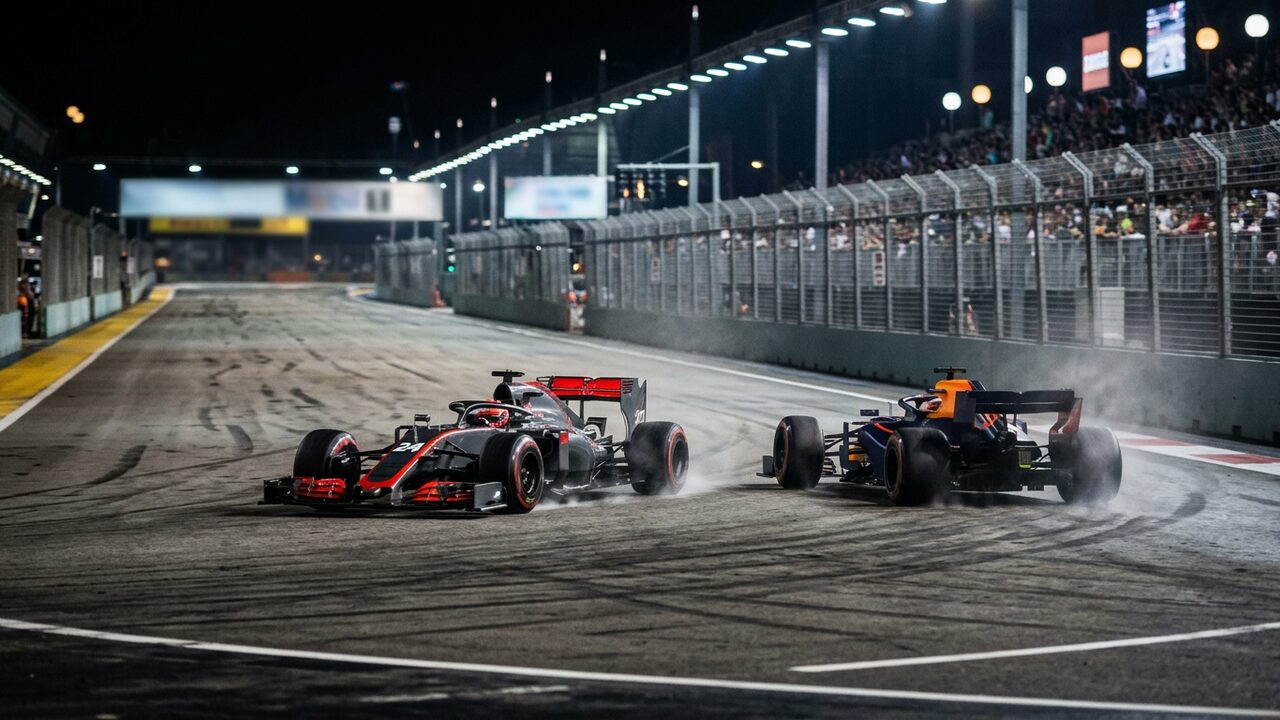
A targeted fix for a specific problem
The drag reduction system opens a flap in the rear wing on designated straights, cutting drag and adding top speed for a following car within a set gap of the car ahead. It was introduced because dirty air had made overtaking rare enough to hurt the spectacle, and it directly targets the straight-line disadvantage that following in disturbed air creates, rather than trying to fix the cornering problem itself.
Why it is restricted so tightly
DRS only activates in defined zones and only for a car within roughly a second of the one ahead, limits designed to keep the advantage available for attacking without simply guaranteeing every pass a straight-line formality. Where those zones are placed, and how many a circuit has, materially changes how many overtakes occur, which is why circuit designers and race organisers treat DRS zone placement as a genuine design decision rather than an afterthought.
The argument it never quite settles
Supporters argue DRS restores overtaking that aerodynamics had made nearly impossible, while critics argue it can make some passes too easy, turning a defensive battle into a formality on the right straight. Both views agree on the underlying fact: DRS is a deliberate compensation for a problem inherent to the cars, and how much compensation is the right amount is a judgement call the sport keeps revisiting rather than a question with one correct answer.