
Why tyres decline the way they do
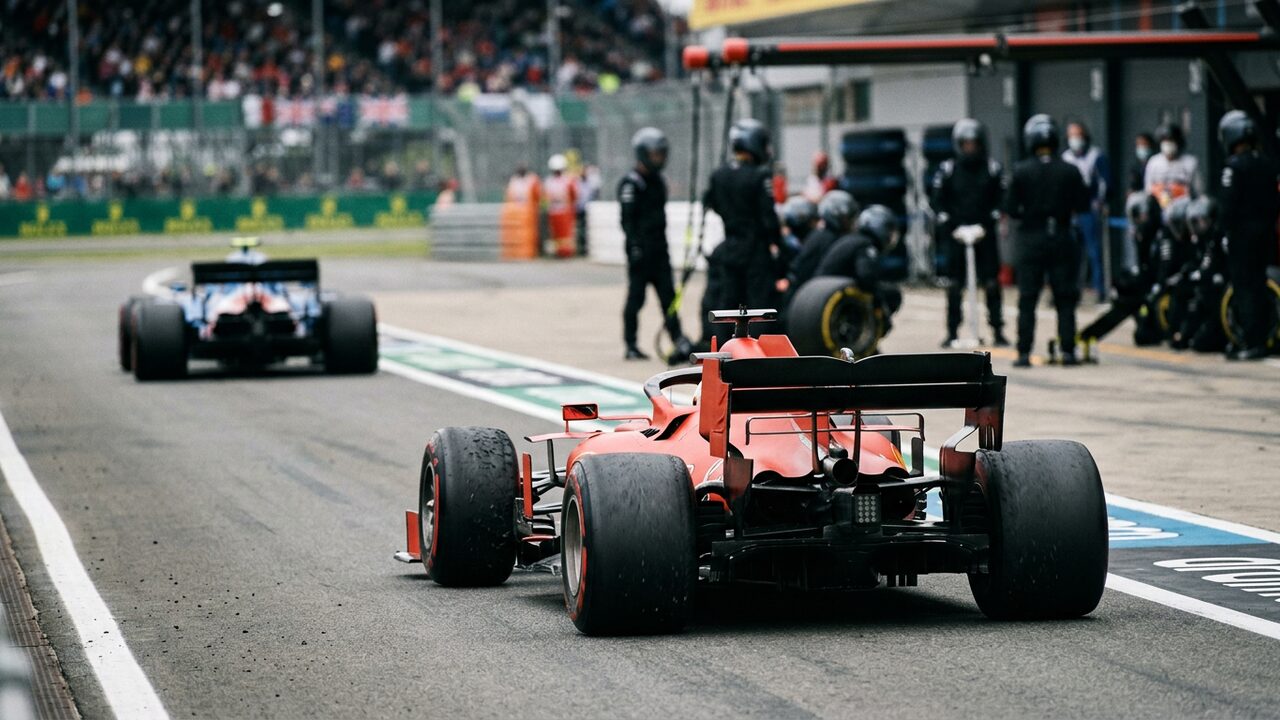
Tyre performance drops as rubber overheats and its surface wears, and this decline often accelerates rather than staying steady, producing a point where lap time worsens sharply rather than gradually. Teams model this curve from practice data and try to plan a stop before that cliff rather than after it, because a driver caught on worn tyres loses far more time than the stop itself costs. The shape of that curve, more than its starting point, is what strategists are really studying.
A window, not a single lap
Because degradation is uncertain and depends on track temperature, traffic and driving style, teams plan around a range of laps where a stop makes sense rather than one precise moment. This window can move during a race as conditions change, which is why a strategy call that looked settled early can shift under a safety car or a temperature drop. Treating strategy as a fixed plan misses the point; it is closer to a continuously updated estimate.
The trade built into compound choice
Softer compounds grip better over a single lap but wear faster, while harder compounds last longer at the cost of outright pace, so choosing a starting tyre is really choosing which part of the race to be strong in. A team gambling on a softer tyre is betting that an early advantage outweighs a later stop or faster decline, and that bet is only as good as the data behind it. This is why identical-looking strategies can be argued about long after a race ends.